Noctis on Mars

~ A Real Time Virtual Mission To Mars

Noctis on Mars

Category Archives: Mars 2016

Taking Care of Family

12 Friday Feb 2016

Posted by Paul Kiser in Earth Space Exploration Program, Mars, Mars 2016, Mars calendar, Science Fiction, Space, Space, Virtual Adventures

≈ Leave a comment

Tags

2016, astronauts, communications, counseling, Counselor, crew morale, ESEP, ESS Queen Elizabeth II, HD cameras, Mars, Mars Mission 2016, science, space, space travel, spacecraft

  • Mars Date/Time:  Year 1, Sur One, Tuesday, Sol 38 (1.1.38)  8:17 AM NST
  • Earth Date/Time:  Wednesday, 10 February 2016  3:00 PM PST

The three of them in orbit watched helplessly on Wade’s monitor as the ESEP Director, Nick Castillo, had been sidetracked by an uncooperative, and now former, Captain. Castillo handled the problem efficiently, but onboard the ESS Queen Elizabeth II a personal crisis was unfolding as their pilot, Dane Paris, was about to learn of a tragedy in his immediate family.

Rear Admiral Jenna Wade was startled by a call to her pad from Dane. She hesitated, but then responded, “This is Jenna.” Dane’s voice was unsure, “Admiral, I was called to my quarters for a call from the Director of ESEP and I’ve been on standby for over thirty minutes. Do you know what is going on?” She knew she couldn’t seem evasive, but she also couldn’t tell him two close family members had been killed and another one was in the hospital over the COMM link. She said, “I’m talking to the Director now, and he’s been dealing with a personnel issue while we’ve been on standby. Why don’t you come to my quarters and you can talk with him as soon as he’s available.” Dane replied, “Okay, thanks.” 

When she looked up she saw Nick Castillo on her video screen listening to her conversation. Castillo said, “Jenna, I know you can handle this, but I’ll be happy to tell him, or I can let you do it and I’ll standby if he needs to talk to me.” Wade replied, “I think it’s good for him to understand your investment in the situation. When he gets here I’ll tell him, but I think it would be best if Wendy, Ken and you were visible to him.” All nodded in agreement.

Stevens quickly jumped in, “Director, do we know the condition of his father-in-law?” Castillo, glanced back at his assistant who was on a video call to someone at her workstation, but she seemed to sense Castillo was looking at her and she looked back while still talking to the other person. Castillo said, “I’ll have Megan get an update, but our last report said he was critical, on life support, and possibly brain-dead.” His assistant waved her acknowledgment without breaking her focus on the video call.

Stevens jumped in again, “Director, if you don’t mind I’d like to send Earth Prime’s Counselor down with Dane. This is going to hit Dane in stages and he will need someone with him at all times.” Castillo responded, “Of course. We can get Nirav back up in a few days, or they can reassign someone to replace him.” Stevens then said, “I’m recommending a Type I Recovery authorization because of the circumstances.” Castillo responded, “Send me the request and I’ll sign off on it and put it in place today.”

A Type I Recovery was the highest level of ESEP family support. It was a support plan for a person or family dealing with the loss of a high-profile employee under public circumstances. It involved Security for the family as well as constant in-home assistance by ESEP Counselors who could authorize almost any expenditure for the comfort and support of the survivors. It normally wasn’t meant for the death of family members, but in this case the media attention would likely be overwhelming once word got out.

Stevens then said to Wade, “We should bring Paige in.” Wade looked confused and Stevens continued, “Paige and Dane have been spending a lot of time together.” Wade said, “I didn’t know that,” and then she touched the icon for her COMM Officer and said, “Paige, please report to my quarters.”

There was silence for a few moments and Wade was feeling for Dane’s loss. She said, “Dane’s daughter is twelve.” Stevens corrected her, “No, she’s thirteen. She had a birthday last week.” At that moment a crisp chime sounded. It was the door chime.

Wade opened the door and saw Dane and Paige standing there. Wade waved them in and asked Dane to come over to her workstation. Stevens moved in next to Paige and put her arm around her. Dane looked quizzically at Hart and Paige looked quizzically at Stevens. Dane saw Castillo standing in his office on Wade’s monitor.

Wade didn’t wait for Dane to ask any questions, she just started by saying, “Dane, the Director has just informed us about some tragic news in your family. Your father-in-law had a severe heart attack this morning and was taken to the hospital. Trice went over to take her mother to the hospital and they were in a car accident. Trice and her mother were killed.”

Wade knew to let this set in for a moment, but she also knew that Dane’s mind would be racing as soon as the reality of the news hit him and so she tried to talk before his emotions exploded and he stopped listening.

Wade continued, “We’re trying to get an update on your father-in-law’s condition, but at last report it was extremely serious.”

Wade paused, then continued. “We’re sending our staff to pick up Abigail from school and they will take care of her until you can get to her.”

Wade paused, then continued again, “The Director has ordered a shuttle to take you back to the surface. It will be ready to leave Earth Prime in a little over an hour.”

Dane asked the most important question on his mind. “Does Abby know?” Now Castillo spoke up, “No. Not yet. We wanted you to tell us what to do. She is getting out of school about now and we can arrange for you to video her there, or we can take her home. We can also tell her if you would like.”

By this time Paige had moved over and put her arm around Dane. She now understood why she was there. Dane said, “I’d like to tell her…as soon as possible…she’ll be scared if she doesn’t understand what is going on….I need to pack…”

Wade had seen this before. It was all starting to hit him. Dane would have a blur of thoughts looming in his mind and then fading away as the next thought consumed the first. He would effectively be non-functional for several hours. 

Wade began mapping out the next steps for everyone, especially Dane. “Paige, you and Wendy take Dane back to his quarters to call Abby and pack. Ken and I will join you there in a few minutes. Paige, only pack what he needs for the next few days. I’m going to ask you to pack up the rest of his stuff after he is on the shuttle.” Wade knew that Paige would likely need to have a schedule of tasks in order to deal with Dane’s tragedy. She also suspected that it hadn’t set in with her that her friend would not be going to Mars with her. Counselor Stevens was going to have an intense few days as Paige and the crew absorb the ramifications.

Dealing with people in crisis was familiar territory for Wade. She started repeating information to Dane multiple times to keep Dane from shutting down. Wade grabbed Dane by the shoulders and said, “Dane, you need to get over to the shuttle after you talk to Abby and pack. Nirav, the Counselor on Earth Prime, is going to join you. Dane, we will arrange  to have someone with you all the way back home and you will have ESEP staff at your home to assist in any way needed.”

Wade avoided the issue of Dane being removed from the first Mars mission. It was too complicated to discuss now and it was just one more tragedy to pile on everything else he had to deal with today.

Stevens stepped in and shepherded Dane and Paige to the door. Paige suddenly realized she had left her post temporarily and needed to let someone know she was not returning immediately.  She turned to the Admiral and said, “My post…” Wade replied, “I’ll inform Naomi of the situation. For the rest of the day you are temporarily assigned to Wendy.”

The three of them left. Wade looked at Hart. For a moment they both felt the magnitude of what had happened, but both of them knew that they would have to stay on task until all the pieces had been put back together.

Wade asked, “Ready?” Hart nodded that he was, and both of them turned their attention to Castillo who had watched the drama unfold as he stood in his office 2,500 kilometers below. Castillo broke the silence, “Do you want to do this top, down?” Wade answered, “Crew announcement first, then top, down.”
Bad Attitude

11 Thursday Feb 2016

Posted by Paul Kiser in Earth Space Exploration Program, Mars, Mars 2016, Mars calendar, Science Fiction, Space, Space, Virtual Adventures

≈ Leave a comment

Tags

2016, astronauts, communications, crew morale, Earth, Earth Space Exploration Program, ESEP, ESS Queen Elizabeth II, fired, HD cameras, Mars, Mars Mission 2016, science, separation, shuttle, space, space travel, spacecraft

  • Mars Date/Time:  Year 1, Sur One, Tuesday, Sol 38 (1.1.38)  7:47 AM NST
  • Earth Date/Time:  Wednesday, 10 February 2016  2:30 PM PST

Rear Admiral Jenna Wade, Commodore Ken Hart, and ship’s Counselor Wendy Stevens had all just been informed by the ESEP Director, Nick Castillo, that their pilot, Dane Paris  had just lost his wife and mother-in-law in a car accident after his father-in-law had been taken to a hospital following a severe heart attack. Castillo had said he couldn’t inform Dane of the tragedy until Wade had made a decision, but he didn’t say what that decision was about.

Wade, Hart, and Stevens knew what he meant. After the commissioning of the ship and crew, ESEP had to let the Mission Commander make any decisions that impacted the ship or mission. Wade turned to Hart and said, “I’m willing to hear Dane out if he wants to stay, but I think he has to go to his daughter. What’s your view?” Hart didn’t hesitate, “If he wants to stay I will try to talk him out of it. For his sake and for his daughter’s sake.” Castillo jumped in, “Wendy, do you concur?” “Absolutely. How soon can we get him down?” she asked. Castillo glanced back and said, “We have a shuttle that just left 30 minutes ago. I’m calling it back and we can have him with his daughter sometime tomorrow.”

Castillo was about to say more when his assistant came up to him and whispered to him. Castillo turned angry and exclaimed, “What the hell?” and then he looked at them and said, “Standby, I still need to talk to you.”

With that he turned and went to his assistant’s station and put the conversation on speaker. Castillo said, “What’s the problem, Jake?” Jake was one of the pilots running shuttles and equipment from the surface to the orbiting spaceport, Earth Prime, where the Queen Elizabeth II and the Carl Sagan were currently docked. Jenna and Ken recognized him from past trips and when he interviewed with them to be on their crew. Jake answered, “No problem, it’s just that Captain Williams is asking me for further information and has ordered me to continue to de-orbit.”

Wade knew Captain Richard Williams. She had also interviewed him for the position on her crew. Williams was a former naval fighter pilot who had close friends in high positions in the U.S. Navy. He was arrogant and self-confident to the point that you couldn’t trust him to be realistic or honest about his crew or ship. Wade had no problem rejecting his application.

Castillo went into a low, measured tone in his voice. It was as if he was about to kill someone or something. Castillo slowly said, “Let me speak to Richard.” Jake looked over his shoulder and said, “Captain, Director Castillo wants to speak to you.” Behind Jake a man with short blonde hair that had receded far back on his head floated up behind Jake. He told Jake, “Put me on speaker, please,” and then said, “Good morning Nick, look we’re already on our way down and we’re at our maximum weight. There’s another shuttle leaving tonight, so we’re just going to stay on schedule and de-orbit.”

Wade hadn’t seen this in a long time. During her first years in the Royal Navy she would run into some arrogant Commander that would attempt to counter her decisions. What they didn’t know is that she always made sure that her superiors were well-informed and in complete agreement with the plan she had initiated. Typically, she would watch a Commander self-destruct in front of her when they tried to slap her down and humiliate her in front of her boss. She knew that Williams had no clue of what he had just done. It was uncomfortable to watch and she had a good idea of what was coming next.

Castillo became eerily calm when he said, “Richard Williams, you are relieved of Command effective immediately. You are to leave the Command deck and you are not authorized to make any further communications. You are to report back to Earth Prime where you will take the tonight’s shuttle back to Earth. Jake, I am temporarily promoting you to Captain. Just a minute.” Castillo could see Williams still floating behind Jake with a look of confusion on his face. Castillo continued, “Dick! Get off the Command deck!” Williams blinked, then turned and floated away.

Castillo then said, “Jake, can you get the ship back to Earth Prime immediately.” Jake smiled and said, “Yes sir, I’ll have her docked within the hour.” It was pretty obvious that Jake wasn’t smiling at the promotion, but at Williams visit with karma. Jake obviously disliked being under Williams command. Castillo then said, “Do you have anyone from Security on board?” Jake replied, “Mr. Soon is on board.” Castillo said, “Have him contact my assistant immediately and once you are back at Earth Prime contact my assistant for further instructions. You can plan departing within the hour after you return. Thank you, Jake” 

Castillo touched an icon on his pad and a voice said, “Security Actual.” Castillo quickly said, “Mr. Duncan, Richard Williams is no longer employed. I am asking Mr. Soon to take charge of him on the Tortuga, at Earth Prime, and then on the shuttle tonight. Would you deactivate his authorization and have a detail meet him with his belongings when he lands tomorrow and then escort him home and collect any ESEP material.” The voice replied, “Done.”

Castillo then touched his pad again and another voice with a French accent said, “Earth Prime Actual, how may I help you Director?” Wade and Hart recognized it to be the voice of Claude Dubois, the Commodore of Earth Prime. Castillo said, “Claude, the Tortuga is returning to you under my orders. We have a crew member on the QE II that has had a family tragedy and he needs to get back on Earth ASAP.” Claude somberly replied, “Very well, we will take care of it.” Castillo continued, “Claude, I have also fired Richard Williams. Would you confine him to quarters and then send him back on tonight’s shuttle. Mr. Soon will be in charge of him.” Claude’s voice betrayed his glee, “Of course.”

Family Crisis

10 Wednesday Feb 2016

Posted by Paul Kiser in Earth Space Exploration Program, Mars, Mars 2016, Mars calendar, Science Fiction, Space, Space, Virtual Adventures

≈ Leave a comment

Tags

2016, astronauts, communications, counseling, Counselor, crew morale, ESEP, ESS Queen Elizabeth II, family crisis, HD cameras, Mars, Mars Mission 2016, space, space travel, spacecraft

  • Mars Date/Time:  Year 1, Sur One, Tuesday, Sol 38 (1.1.38)  7:17 AM NST
  • Earth Date/Time:  Wednesday, 10 February 2016  2:00 PM PST

Each crew member on the ESS Queen Elizabeth II carries a personal tablet or pad that connects them to the ship and the onboard communications system. It can be used for video calls between crew members or to any department of Earth Space Exploration Program (ESEP) Command.

However, normally tablet communication is audio only and off ship communication is channelled through the Comm Center on the ship or through workstations around the ship. This protocol can be bypassed under certain circumstances, so when Rear Admiral Jenna Wade pad indicated she had an incoming call on her tablet from ESEP Actual, she knew it was important.

“This is Mars Mission Actual,” she said. The Director of ESEP, Nick Castillo was not usually somber, but his voice had a very serious tone as he skipped all pleasantries and said, “Jenna, I need you in your quarters for a video call. I also need Ken and Wendy there.” Wade knew there was no point in asking why. Castillo clearly needed to discuss something without anyone else hearing the conversation. Jenna said, “On my way.” Wade was about to end the call when Castillo added, “Jenna, I also need Dane to go to his quarters and wait for a call.” Wade simply said, “Acknowledged.”

From Castillo’s tone and instructions Wade knew there was some type of emergency and everything else would have to wait. Wade called Commodore Ken Hart and Counselor Wendy Stevens and told them to report to her quarters immediately. She then decided to have Paige Flores, the Comm Officer, contact Dane Paris. The Comm Center contacting Dane for a private video call would not be unusual, but coming her it would indicate something ominous.

Wade had surmised that this must be a personal issue for Dane as the ship’s Counselor would not be needed if the emergency involved the ship or the mission. As she arrived at her quarters Wendy Stevens was waiting outside. Stevens said, “What’s up?” Wade said, “Nick wants to talk to us, but it must be something about Dane.” As they were going in Ken Hart arrived and asked the same question. Wade said to both of them, “Nick has something for us and Dane has been asked to go to his quarters for a call, my best guess is a major personal issue.”

Wade crossed to her office and touched a flashing icon. Immediately Castillo was on the bigger video monitor over Wade’s desk. He was standing in his office talking to his assistant who was a younger woman whose focus was solely on her boss. He turned to them and said, “My apologies, give me a moment.” He then turned back to her and said, “Tell the pilot to hold station until further notice. Let him know the Tortuga may have to go back.”

At that point she turned to a console behind them and a man sitting at a Command station on a shuttle appeared. She was talking to him she was on a headset and was obviously trying not to disturb her boss’s conversation with them. Castillo came closer to the camera and said, “Jenna, Ken, Wendy, we have a problem that is going to affect your team. About seven hours ago Dane’s father-in-law had a severe heart attack and was picked up by ambulance.”

Wade’s heart sank, but Castillo went on, “For whatever reason his mother-in-law stayed behind until Dane’s wife arrived. The two of them were driving to the hospital, and I don’t have all the details yet, but apparently they arrived at a light that had just turned green and the went through when another car was racing through the intersection trying to beat the red light. They were hit square on the driver’s side and both Dane’s wife and mother-in-law were killed.”

Wendy spoke immediately. “Does Dane’s daughter know?” Castillo said, “Not yet. She gets out of school in about 45 minutes and we’ve asked the police and the school to let us handle it. Dane’s mother and sister live in Denmark and his wife’s sister lives on the East Coast. There is no family near his daughter…uhm…,” Castillo glanced at his pad, then continued, “Abigail, to pick her up or stay with her.”

Two minutes ago, Dane Paris was preparing for a trip to Mars. Everything in his world was about to change.

Castillo continued, “I asked you to order Dane to his quarters so he would be occupied while we talked. Dane has checked in with us and is standing by. Before we talk to him I need your decision Jenna.” 

The Missing Piece

09 Tuesday Feb 2016

Posted by Paul Kiser in Earth Space Exploration Program, Mars, Mars 2016, Mars calendar, Science Fiction, Space, Space, Virtual Adventures

≈ Leave a comment

Tags

2016, astronauts, counseling, crew morale, ESEP, ESS Queen Elizabeth II, Mars, Mars Mission 2016, psychology, science, space, spacecraft

  • Mars Date/Time:  Year 1, Sur One, Friday, Sol 34 (1.1.34)  9:51 PM NST
  • Earth Date/Time:  Sunday, 7 February 2016  2:00 AM PST

The wine and the late hour was starting to wear on both Wade and Stevens. They had gathered at 5:00 PM for the Admiral’s Mess with the rest of the Command team. It was now five hours and later and they were still dealing with ship business.

It was Counselor Stevens job to constantly assess the crew and tonight was her first chance to speak privately to Rear Admiral Jenna Wade since she came on the ship. Wade shifted in her chair and leaned forward to pick up the wine bottle and pour more wine in Stevens’ glass, then she finished off the rest of the wine in her glass. Wade said, “You’ve read my file, you been on board for a week, what’s your opinion?”

Stevens was being backed into a corner, but she expected nothing less from Wade. Normally she would turn this around and tell the crew member that she needed to ask the questions, but Wade was not a normal crew member…or normal human.

Steven’s began, “You are one of the most interesting persons I’ve ever encountered. Your father was an engineer and your mother was a psychologist. Both had advanced degrees and you were a late, only child. You honored both your father and your mother by double majoring in engineering and psychology and you did it in five years. You then got your masters degree in social psychology with a thesis that involved the social dynamics of sailors on a Royal Navy ship.”

Stevens stood up, took a sip of wine, stretched, and then continued, “And then things become interesting. Whether it was because of your thesis or because your grandfather was an officer in the Royal Navy, you joined and attended officer training at Dartmouth. Upon completion you served ten years in the Royal Navy, the last five on the HMS Illustrious. As I said before, you were probably in line for a prestigious post on the newest British aircraft carrier HMS Queen Elizabeth II, but you left the Royal Navy in 2010 to join the ESEP.” Stevens paused again and sat down.

Wade sat in silence. She knew Stevens would have looked at her record, but she was surprised at the detail that Stevens could recall. Stevens either had an amazing memory or she was very intrigued by her history.

Stevens resumed, “I couldn’t find an unenthusiastic review of your work in your file. Everywhere you’ve been your superiors gush over your skills of managing people, logistics, and just getting things done. It seems like the harder the task, the more you dive in and find the answers.”

Wade said, “You certainly know my history. I don’t think I’ve ever told anyone my grandfather was an officer in the Royal Navy.”

Stevens replied, “It’s my job to find out more than what’s in the file; however, I’m missing part of the picture.” Wade knew what Stevens was probably talking about, but decided to play dumb. She inquired, “What part?”

When you were vetted they only found one significant relationship and that was for two years and you ended it with her shortly before you joined ESEP. My experience has been that work is often a substitute for harder things like relationships and that usually is a personality time bomb. Care to fill me in?”

Wade knew that any good psychologist would see the obvious lack of a personal life and be concerned. She had self-assessed her lack of relationships and it was the part of her life that she found uncomfortable.

Still, she confronted challenges and she knew it would be better to be open with the Counselor than to let her guess. Wade looked down at her glass and then looked at Stevens and began,

When I was in Secondary school I fell in love with a young man who I believed was my perfect match. We were together for over a year and I was sure we would get married after graduation. Unfortunately, he didn’t have the same plan and we broke up. My mother helped me work through the loss, but it changed our relationship. From then on she questioned me incessantly about any potential relationship and it became easier to simply avoid them. College gave me a chance to focus on my education and career goals and I didn’t have time to become romantically involved.” Wade took her last sip of wine.

After a moment Wade began again, “The Royal Navy was virtually the same as school. No time to become romantically involved and there were the of issues with rank and sex. I did have one night stands, but never with a sailor or officer. I also discovered that I enjoyed being with a woman as much as a man.

While I was still in the Royal Navy I had met someone in Portsmouth and we kept in touch. At some point we started becoming serious and we moved in together. It was fine as long as I had time away, but it became tedious the more time I spent at home. I eventually decided to make some changes in my life and leaving her and the Royal Navy were those changes.”

Stevens sat in silence for a moment then suddenly said, “OK,” and stood up. She continued, “Another psychologist would have a field day with this, but I just want you to be aware that we should talk about any romantic feelings you develop on this mission for a crew member. You know from your naval experience the complications of romantic relationships; however, ESEP’s position is that crew romances are okay as long as they are consensual, open, and don’t distract from the duties and mission.

My concern is that if and when you begin having romantic feelings that you might need help on how you construct a new personal life within the confines of this monster of a task you have taken on. You are an extraordinary person who has done extraordinary things and will continue to do amazing things. I will be there if things get out of your comfort zone and I don’t expect you’re going to give me much work unless you catch a love bug. Fair enough?”

Wade smiled and stood up. “Fair enough.” Stevens then said, “Get some sleep, tomorrow is another long Mars day.” With that Stevens turned and walked toward the door. Wade followed her, told her thanks and good night and closed the door.

Wade was impressed. She had not expected Stevens to validate her life path and put her lack of relationships as a cautionary concern, rather than a psychological red flag. She began to realize why the Nick Castillo, the ESEP Director, recommended her as ship’s Counselor. She collected the wine glasses and the empty bottle then stopped.

“Damn, she’s good,” Wade quietly said to herself.

Wine For Two

08 Monday Feb 2016

Posted by Paul Kiser in Earth Space Exploration Program, Mars, Mars 2016, Mars calendar, Science Fiction, Space, Space, Virtual Adventures

≈ Leave a comment

Tags

2016, artificial gravity, astronauts, Counselor, crew morale, engineering, ESEP, ESS Queen Elizabeth II, gravity, Jenna Wade, Mars, Mars Mission 2016, physician, science, space, space travel, spacecraft design, Wendy Stevens

  • Mars Date/Time:  Year 1, Sur One, Friday, Sol 34 (1.1.34)  9:21 PM NST
  • Earth Date/Time:  Sunday, 7 February 2016  1:30 AM PST

Roman Guzman, the Director of Engineering had left the Rear Admiral’s quarters 45 minutes ago, and the ship’s physician, Kayla Summers just left. Rear Admiral Jenna Wade was now alone with Wendy Stevens.

In the last two hours they had discussed the mental and emotional health of the entire crew, with the exception of the four people who were in the meeting. Wade knew what came next.

Stevens began, “Why did you select Guzman?” Wade replied, “You mean to bring into this meeting?” Stevens responded, “No, I know why you did that. He needs to see the bigger picture and you included him so he would understand the human aspect of this mission…but why did you select him for the crew, and as the Director?”

Wade had been asked to be the Director of the first Mars mission almost three years ago and the given the Commander position in late 2014. She didn’t immediately pick her crew, but rather choose people to work in various functions on the project and evaluated them as potential crew members. She had brought Guzman into ESEP within weeks of taking the Director job in 2013, and he was the first person to be selected on her crew. No one had ever asked why.

Wade said, “You know I brought him into ESEP before right after I was made project director.” Stevens said, “Yes, and I know he came out of the Royal Navy like you did, but he served on one of the ships after you, correct?” Wade smiled and said, “Sort of, I was a Commander on the HMS Illustrious until 2009 and then left the Royal Navy for ESEP in 2010.” Stevens interrupted, “You were a shining star on the Illustrious and the Royal Navy probably wanted you for the HMS Queen Elizabeth II.”

Wade laughed and said, “I was good at handling events and planning and we were the best ship the Royal Navy had left for PR events. As for the HMS QE, I would have liked to serve on her, but I’m not convinced she’ll ever come out of dry dock. Regardless, after I left the Illustrious was put into a refit. As it was it was coming out of the refit they were having multiple systems problems. In early 2011, I was asked to take a short leave to return to the Illustrious to get it back on schedule.”

Stevens interrupted again, “And that’s when you met Roman Guzman.” “Not exactly,” Wade replied, then continued, “There was a Chief Engineer on the Illustrious that was a blowhard. I kept after him for answers to a fuel flow problem we were having and he kept giving me excuses. Then one day the problem is solved and the Chief Engineer claimed the solution came to him in a dream. I didn’t buy it and six months later I learned that it was Roman Guzman who figured out the problem and fixed it. I started looking into his record and realized he either was consistently lucky, or very talented in solving problems.”

Stevens said, “He tends to have a myopic view.” Wade replied, “Show me an engineer who doesn’t. He’s loyal to the cause as long as he knows he’s part of it. Are you concerned?” Stevens thought for a moment then said, “Knowing his history helps. It sounds like he is very protective, but that’s okay providing he doesn’t mark out his territory and go to war with you.” “Not a concern.” Wade said, “If he jams in his heels it’s for good reason, otherwise, he’s a team player.”

Wade decided it was time to move on, “Dr. Summers?” Stevens took a drink of wine and said, “I can’t tell much about her that you don’t know. Unfortunately, it will be a crisis situation where I’ll have the best opportunity to assess her, but that probably won’t happen until we’re in route to Mars.” Wade tried to reassure her, “Summers has a lot of ER experience. I think she will be fine.”

Wade knew they had come down to the final crew assessment and said, “And what about me?”

After Dinner Conversation

07 Sunday Feb 2016

Posted by Paul Kiser in Earth Space Exploration Program, Mars, Mars 2016, Mars calendar, Science Fiction, Space, Space, Virtual Adventures

≈ Leave a comment

Tags

2016, artificial gravity, astronauts, biology, communications, crew morale, engineering, ESEP, ESS Queen Elizabeth II, gravity, HD cameras, Mars, Mars Mission 2016, physician, science, space, space travel, spacecraft, spacecraft design

  • Mars Date/Time:  Year 1, Sur One, Friday, Sol 34 (1.1.34)  7:21 PM NST
  • Earth Date/Time:  Saturday, 6 February 2016  11:30 PM PST

The first Admiral’s Mess was now approaching two and a half hours. Rear Admiral Jenna Wade said, “Let’s save something for us to discuss at Mess tomorrow. I’d like Wendy and Dr. Summers join me in my quarters. Roman would you join us also.”

Roman Guzman was the Director of Engineering so he could see no logical reason he would be invited to join the Admiral and the ship’s Counselor and physician for a meeting. At the beginning of the Admiral’s Mess he had made the mistake of complaining about the Counselor, but the Admiral had already dealt with that in an not-so-subtle manner.

They cleared their food containers and then divided up. Pierce was on duty tonight and headed to the Command deck to check in. Hart went to his quarters below and Lanny Deaton headed to his quarters in the Science Quill. The rest of the Command team followed Wade to her quarters in the same section as Commodore Hart.

Command quarters were twice the size of the regular crew quarters and included a bathroom with a shower. Crew quarters were roomier than one might expect on a spaceship, but they were primarily a place to sleep. Command quarters were a place to sleep, work, and meet with small groups.

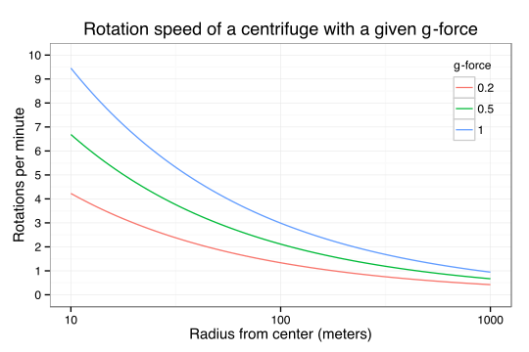
Rear Admiral Wade’s quarters were functional, and well kept. The video displays on the wall showed a live view of the outside of the ship with Earth in the background. This view wasn’t an accurate placement of the real scene as the Quill they were in was spinning at the rate of two revolutions per minute. The rest of the walls were of a two-hour looped recording of a tropical scene with a waterfall. The exception to this were a video console and monitor over a work station in her ‘office.’ There the displays were of ship systems and status reports.

Wade invited the three to sit as she gather glasses and a bottle of wine from a locker on the wall. She started pouring wine and Guzman quickly said, “None for me, Admiral.” She replied, “Do you have a drinking problem?,” She knew the answer as she would not have put a recovering alcoholic in charge of Engineering. He said, “No.” Then she followed up and asked, “Do you drink wine?” Again, she knew the answer when he said, “Yes.” Wade then smiled and said, “Good. Consider this an order: You will drink a glass of wine. That goes for the you two,” Stevens and Summers looked at each other and said, “Aye, aye, Rear Admiral.”

As Wade passed out the glasses of wine she said, “Roman, I wanted you to join us so we could talk about the process of ongoing crew assessment. As I said at Mess, we are entering the unknown when it comes to the impact of stress and isolation on our crew. We can’t just fire someone and get a replacement, so we have to assess and respond to issues before they become a crisis. Wendy, would you explain our system.”

Wendy set down her glass and said, “I look at every crew member from three perspectives. I talk to them and try to understand their self perception, I talk to others to determine what they perceive about the crew member, and finally, I develop my own perceptions of the crew member. I then send a video report of my findings to a team of psychological and sociological professionals on Earth. They then develop a plan for me, for the Team Director, and for the Command staff that is designed to meet that crew member’s psychological and emotional needs.”

Guzman said, “It sounds like you have us down to a fine art.” Wade replied, “We don’t, but it’s not like we’re working with a propulsion gun and we know exactly what output each pellet will have. We are working with perceptions and with imperfect humans. We are not trying to manipulate people, just keep a constant awareness of their mental state and, when needed, step in with support.”

Stevens said, “You should also know that our assessment process on this first mission is as much about research as it is counseling. The hope is that by closely monitoring our crew, the ground team will develop better strategies to help crew members on future missions.”

Wade took back the conversation, “At least three times a week the three of us will meet to discuss crew member assessments. When the plan involves taking action to address the acute needs of a crew member we will likely bring the Director over that crew member into our meeting so that everyone is on the same page. Periodically, we will bring in a Director to review all of their team members. Since you’re here tonight, Wendy, let’s run through the Engineering team.”  

Guzman took a big drink of wine.

Admiral’s Mess

06 Saturday Feb 2016

Posted by Paul Kiser in Earth Space Exploration Program, Mars, Mars 2016, Mars calendar, Science Fiction, Space, Space, Virtual Adventures

≈ Leave a comment

Tags

2016, astronauts, crew morale, engineering, ESEP, ESS Queen Elizabeth II, Jenna Wade, Mars, Mars Mission 2016, physician, Roman Guzman, science, space, space travel, spacecraft, Wendy Stevens

  • Mars Date/Time:  Year 1, Sur One, Friday, Sol 34 (1.1.34)  05:21 PM NST
  • Earth Date/Time:  Saturday, 6 February 2016  9:30 PM PST

During the construction and configuration of the ships people tended to adapt to the pattern of sleeping and eating that worked best for them and the team they worked on; however, now that the crew worked in shifts a pattern of eating and sleeping at coordinated times began to take hold.

It had been six days since commissioning of the ships and crew and Rear Admiral Jenna Wade decided to resurrect a time tested naval tradition, the Admiral’s Mess. Wade served ten years in the Royal Navy and though she had been with ESEP for the last six years, she still kept the military culture as her internal guide.

Almost all of the Command team had gathered already and had selected and prepared their supper. This was a process of grabbing the ration container scheduled for the meal, placing in a doorless, microwave-type device and attaching it to a sensor/tube connector. The sensor identified the meal, added appropriate amount of water vapor and/or steam to the each section of the container to hydrate and thaw the food. At that point the induction plate under the ration heated each section to its correct temperature.

When the ration was ready the person disconnected the tube, removed the top cover, and the food was ready to eat. The ship did have some raw food on board, and the means to prepare it; however, preparing meals was among the lowest priority on this mission, and with the exception of special occasions, it was designed to take the minimal amount of time.

Six of the seven members of the Command team had gathered in the fifth section of the Command Quill. They were already eating their rations and were sitting at a bar-like table that surrounded the central corridor of the Quill. It was an odd place for eating because anyone moving up from the Command living quarter or moving down from the Command deck would pass through the eating area.

However, it did provide an eating arrangement where everyone faced each other, which promoted interaction between people. That was considered vital by ESEP as the crew would function better if involved in social activities during the months and years they would be disconnected from civilization.

Already at the bar were Rear Admiral Jenna Wade; Commodore Ken Hart; the Communications Director, Naomi Pierce; Science Director, Lanny Deaton; Engineering Director, Roman Guzman; and Dr. Kayla Summers, the ship’s physician.

Admiral Wade broke in on the casual conversations, “Our Counselor will join us in a minute, but we should probably begin.” Guzman jumped in, “Regarding Dr. Stevens, I know our team members have to meet with her after we are underway, but she has already been taking my team away for her sessions. Is there a way you can tell her to back off until after were underway?”

Wade calmly looked at Guzman, and said, “First, no one is ever to call her ‘Dr.’ Stevens. She has doctorate degrees from both Stanford and Harvard, but she and ESEP share concerns about the perception of the title of Psychologist or Doctor. If you go to someone to get medical help you want to know they are a professional, but if you want to have someone open up about their concerns and fears they need to be perceived as someone they can talk to at their level.”

The rest of the Command team looked uncomfortable in their chairs. Wade’s had yet to respond to Guzman’s question, but everyone knew he was about to be slapped down hard.

Wade continued, “Each person here has an important function to perform for the success of this mission, but none of us can function without the entire crew working together. In addition, we are about to leave civilization as we know it and experience stress and separation that will test even the most stable person. Wendy’s function is to assess our crew and determine the needs and limitations before we have a crisis.”

Wade paused and nobody said a word. Then she continued, “Before we leave Earth I want to know if we have anyone who shouldn’t be leaving with us, so in answer to your question, yes, Wendy will be interviewing, and re-interviewing your crew, and unless it is at a critical time in your area, Wendy will have full access to everyone on board at anytime.”

“Sorry I’m late. What did I miss?,” Stevens said as she joined the rest of the Command team at the bar. She was met by silence, then Wade said, “I was talking about the crew evaluations your conducting. How are they going?”

Commissioning Ceremony: Queen of Mars

05 Friday Feb 2016

Posted by Paul Kiser in Earth Space Exploration Program, Mars, Mars 2016, Mars calendar, Science Fiction, Space, Space, Virtual Adventures

≈ Leave a comment

Tags

2016, astronauts, crew morale, ESEP, ESS Carl Sagan, ESS Queen Elizabeth II, Governor of Mars, Jenna Wade, JPL, Mars, Mars Mission 2016, NASA, science, space, space travel

  • Mars Date/Time:  Year 1, Sur One, Sunday, Sol 29 (1.1.29)  1:41 PM NST
  • Earth Date/Time:  Monday, 1 February 2016  2:37 PM PST

The promotion of Captain Hart to Commodore presented an interesting problem. Normal navy ranking placed a Commander below the rank of Captain. This had not been an issue as Commander Jenna Wade had been placed as the ranking officer of the Mars Mission and Captain Hart’s ships were to serve that mission.

However, as Commodore, Hart’s rank was two steps over Commander Wade and the difference would be hard to ignore as both Hart and Wade were both former naval officers. Wade was not the type to be concerned with a rank or title, but it did raise the question of what would happen if Hart and Wade disagreed on an issue?

The crew may have been aware of this issue as quiet discussions among them continued after the applause died down. Castillo became aware of this and decided he needed to keep the ceremony moving. The Director of ESEP once again gave Mr. Duncan a signal. Mr. Duncan moved forward to the edge again and then announced, “COMMANDER WADE, REPORT!”

Mr. Duncan’s attempt to bring order to the section have the effect it should have so the new Commodore stepped forward next to Mr. Duncan and announced, “CODE ALERT!” The crew instantly returned to attention as Mr. Duncan and Commodore Hart stepped behind Castillo. By this time Wade had arrived at the side of the ESEP Director who began again,

Commander Wade, the Earth Space Exploration Program has designated you as Commander of the Mars Mission. We also designate your crew of 27 astronauts listed in your orders, and any subsequent additional and/or replacement personnel to be under your command until such time as you are relieved of you duties on the Mars Mission.

Unlike the promotion of Captain Hart to the rank of Commodore, this announcement was merely a formality. Jenna Wade had been their leader for the past year and she had already been designated as the Mars Mission Commander. There was polite applause, but it wasn’t the wild applause of the last announcement. Castillo quickly waived for the applause to stop and then resumed,

However, in order for you to fulfill your responsibilities we are promoting you to the rank of Rear Admiral in accordance to naval tradition.

The Command deck exploded with applause as Wade’s new rank was not only deserved, but necessary. Castillo was not finished and he continued,

Jenna Wade, ESEP has decided that while the Mars Mission is one of exploration, it is also one that must consider the human and societal aspects of creating a community on another planet. Therefore, on the day that the first plant sprouts in any habitat on Mars, that location will be considered a colony of Earth and you are designated to act as Governor of Mars until such time as relieved of that duty by order of ESEP.

Castillo had done it again, but this time surprise was more of shock. All the discussions of ESEP’s mission to Mars had carefully avoided the mention of colonization for fear of reviving memories of disastrous efforts on Earth to colonize less developed countries in past centuries.

However, there was a reality that the ESEP administrators knew had to be addressed. Three more missions would arrive at Mars while Wade’s team was still there. Would the new missions have a different command, and how would each mission integrate with the priorities established by the first mission? Someone had to be that leader and the highest ranking officer of the first mission was the logical choice.

Commander Wade’s personality and background also qualified her for the position. The problem was that no one had discussed this with her, and making the announcement to the world at the same time she learned of it was forcing her to accept the decision.

She knew she would be the ranking officer until she returned to Earth and she knew she would have the most information and knowledge of any mission Commander, but Governor of Mars was a more powerful position and it came with more responsibilities.

Still, the declaration was a smart move for ESEP. It gave them over two years to assess the situation and determine who should be the next Governor of Mars. When she returned to Earth they would have a new Governor in place and the program would move on. With Wade as Governor, it effectively ended any issues of an arriving Commander conflicting with the established procedures and protocols.

Still, Wade was caught off guard. She felt flashes of embarrassment, pride, and anger. She knew the public announcement was meant to avoid discussion and forced her to accept the decision, but to the people watching it was a great honor that was being given to a rising hero of humanity.

She composed herself and fought back the emotions. At this moment she must show humility and acceptance of this honor. Later she would take Castillo to quiet place and inform him of her displeasure of how this was handled.

Commissioning Day: A New Command

04 Thursday Feb 2016

Posted by Paul Kiser in Earth Space Exploration Program, Mars, Mars 2016, Mars calendar, Science Fiction, Space, Space, Virtual Adventures

≈ Leave a comment

Tags

2016, astronauts, Captain Ken Hart, Commodore Hart, crew morale, ESEP, ESS Carl Sagan, ESS Queen Elizabeth II, JPL, Mars, Mars Mission 2016, NASA, science, space, space travel, spacecraft

  • Mars Date/Time:  Year 1, Sur One, Sunday, Sol 29 (1.1.29)  1:29 PM NST
  • Earth Date/Time:  Monday, 1 February 2016  2:25 PM PST

The possibility that carbon dioxide was building up to dangerous levels in the Command deck once again crossed Castillo’s mind. He shook off the thought and continued the ceremony. He leaned to Mr. Duncan and quietly gave him a ‘go’ signal. 

Mr. Duncan was a former Marine and he was all business. His function at ESEP was Director of Security. Castillo knew Duncan was the person to bring order and dignity to this ceremony.

Duncan marched to the edge of the platform, looked straight ahead and announced, “CAPTAIN HART, REPORT!” Captain Hart, also former military, moved to Castillo and stood at attention. Castillo began,

Captain Kenneth Hart, you are given the command of the Queen Elizabeth II and also of the Carl Sagan. Upon arrival at Mars you will establish and assume command of Mars Spaceport Prime.

However, we have learned we have a problem.

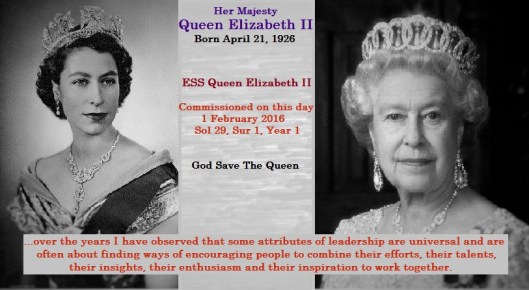
When her Majesty, Queen Elizabeth was briefed on this mission she apparently pointed out an issue we have overlooked. She asked how can one person be Captain of two ships. She is, of course, correct. For this reason ESEP has promoted you to the rank of Commodore effective immediately.

During the enthusiastic applause Castillo took a small open box with his Commodore’s new insignia and a folder containing documentation of his new rank and his written orders and gave it to Hart.

Hart was not forewarned that he was being promoted. As he absorbed the announcement he realized that ESEP had solved an issue that he hadn’t thought of before. His status as Commodore would place him in charge of all activity to and from Mars Spaceport Prime, which would be odd for a Captain. Promoting him to Commodore made perfect sense.

Castillo reached out and shook Hart’s hand and warmly congratulated him, then leaned into him and quietly asked, “Are we going to have a carbon dioxide issue in here?” Hart replied, “You mean too many sets of lungs in here?” Trying not to show concern Castillo said, “EXACTLY!” Hart leaned into the Director’s ear and said, “No, we’ve upped the air. We’re good.” The Director smiled with relief and said, “Oh thank goodness, the last thing we need is alarms going off during the ceremony.” Hart replied, “Oh we turned off the alarms. If there is a problem we’ll all just die.” Hart smiled and backed away. Castillo hoped he was joking.

Commissioning Day: Queen Elizabeth II

03 Wednesday Feb 2016

Posted by Paul Kiser in Earth Space Exploration Program, Mars, Mars 2016, Mars calendar, Science Fiction, Space, Space, Virtual Adventures

≈ Leave a comment

Tags

artificial gravity, astronauts, Commissioning, communications, crew morale, engineering, ESEP, ESS Carl Sagan, ESS Queen Elizabeth II, gravity, JPL, Mars, Mars Mission 2016, Mars time, NASA, Noctis Standard Time, NST, Pacific Standard Time, Queen Elizabeth II, science, space, space travel, spacecraft, spacecraft design, Time, Time Zones

  • Mars Date/Time:  Year 1, Sur One, Sunday, Sol 29 (1.1.29)  1:10 PM NST
  • Earth Date/Time:  Monday, 1 February 2016  2:06 PM PST

Many of the same people present on the Command deck of the ESS Sagan were now present on the Command deck of the ESS Queen Elizabeth II. The main difference was the presence of all 28 members of her crew.QE II Plaque

For years engineers, scientist, and crafts people had been thinking, planning, designing, and building on a dream to send humans to Mars. Now the entire program became real. Today, two ships and a crew of 28 would officially become Earth’s first interplanetary ambassadors. 

Commander Jenna Wade began the final Commissioning ceremony with a nod and one word, “Captain.” At that Captain Ken Hart followed the same procedure he had done earlier in the day and broadcast a “Code Alert,” which meant everyone to standby for an important message to the crew.

As the Captain, anyone on his ship, with the exception of Commander Wade, was subject to his orders; however, this ceremony included many more people than those standing in the Command section. Around the world millions of people watched as this group of people orbiting 2,500 kilometers above Earth were witness to history. Today Earth would commission the ships and crew to be committed to take humanity to the fourth planet.

After this morning’s ceremony Earth had commissioned the ESS Carl Sagan. Now, the second ship, the ESS Queen Elizabeth II and the entire crew would be commissioned.

Again, it was Nick Castillo, the Director of the Earth Space Exploration Program or ESEP, that would conduct the ceremony. In his hands he held two cloth covered plaques. Everyone knew one was the ship’s plaque, but the other object was a mystery.

Castillo stepped to the edge of the platform near the center of the Command deck and began,

For over a century we have pretended that we still had ‘frontiers’ on Earth. There are many things we still need to explore and understand on our planet, but no place on Earth is really a frontier. This ship and crew, along with the sister ship the ESS Carl Sagan, are reviving the exploration of a true frontier.

Since 1960, Earth has sent 46 unmanned missions to Mars. Only one-third of them made it. The ones that did make it have given us volumes of data; however, the knowledge we have gained about Mars and interplanetary travel will double within one year after we set foot on Mars.

Human exploration is the most efficient way to truly explore a frontier as vast as Mars, and now we are ready to step past the millions of kilometers between Earth and Mars and write the next chapter of human knowledge.

Castillo paused as the everyone applauded. He looked around and realized that this was the largest group of people to ever gather in space. At that moment it hit him. His smiled suddenly disappeared. What would happen if the carbon dioxide in the air rose to toxic levels? He briefly considered stopping the ceremony, but then quietly reassured himself that alarms would go off if there was a problem, so he continued and hoped that the ceremony wouldn’t end in an embarrassing scramble for oxygen,

On the 24th Earth day of this month, and the 51st Mars day of Sur One, this ship will lead humans to another world and they will do so on a ship named after one of history’s most constant leaders, Queen Elizabeth II. For over sixty years she has served as Queen of the United Kingdom and the Commonwealth. Today we thank her for service to humankind and name this ship in her honor.

Castillo removed the cloth from one of the covered objects and held it up for the remote cameras to zoom in on while the section was filled with clapping. He then handed to plaque to one of the ESEP VIP’s standing behind him, and then Castillo continued,

As the first ship to begin our human journey to Mars it has been designated as the Flagship of Earth’s coming fleet of ships. It will pass this designation to the ESS Carl Sagan once the two ships integrate, but it will retain Flagship status anytime she flies as an independent ship.

It has also been decided that the ESS Queen Elizabeth II will be the first ship to carry back a crew from Mars in April 2017.

He unveiled the second plaque designating the QE II’s Flagship status and again held it up for all to see. After a brief period of applause Castillo handed the second plaque to the man behind him and turned to one of the other ESEP VIP’s who looked more serious than the rest and said, “Mr. Duncan, if you please.”

Commissioning Day: Seeking the Incredible

02 Tuesday Feb 2016

Posted by Paul Kiser in Earth Space Exploration Program, Mars, Mars 2016, Mars calendar, Science Fiction, Space, Space, Virtual Adventures

≈ Leave a comment

Tags

2016, artificial gravity, astronauts, Carl Sagan, communications, crew morale, engineering, ESEP, ESS Carl Sagan, ESS Queen Elizabeth II, gravity, HD cameras, High Definition, JPL, Mars, science, space, space travel, spacecraft design, Time

  • Mars Date/Time:  Year 1, Sur One, Sunday, Sol 29 (1.1.29)  9:10 AM NST
  • Earth Date/Time:  Monday, 1 February 2016  10:06 AM PST

Several of the remote-controlled cameras inside the Auxiliary Control Deck, or ACD, were active and broadcasting the scene on the ESS Carl Sagan. One of them zoomed in on a man standing on the sixth deck of the ACD holding a flat object covered in a soft cloth. He was Nick Castillo, the Director of the Earth Space Exploration Program or ESEP. Castillo looked at the 21 people in the Command Deck and then began,

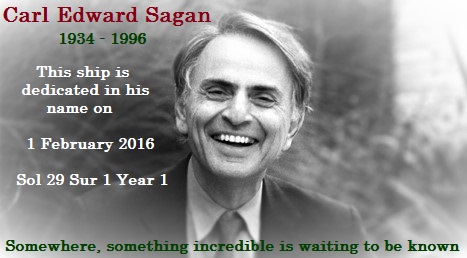
Carl Sagan said, ‘Somewhere, something incredible is waiting to be known.’ Today, I stand on the Command Deck of a ship that will take us in search of the incredible. Often space programs justify their existence by explaining that what we learn out there will help us better understand our world. This is true, but the exploration of space elevates us as a species.

Sagan Plaque

We are not merely seeking a better understanding of Earth, but a better understanding of the human being and the context in which we all exist.

The incredible awaits us and now we have Archimedes’ lever that will take us there. This ship, the Earth Space Ship Carl Sagan, is that lever that is big enough to move our world to Mars.

Almost fifty years ago we took a step off our home world and landed on the Moon. The impact of taking that small step has carried humans into a new age of technology and economic success. It is long overdue for us to take the next step.

The Carl Sagan will not take our crew to Mars to touch it and quickly run back home. Almost all of this ship will stay in orbit around Mars, or serve as human’s first habitat on the surface of another planet.

With this ship we honor Carl Sagan for his vision, his brilliance, and his love for humankind. Without people like Carl Sagan we would still be nomadic tribes subject to the whims of nature and superstition.

And so, on behalf of the Earth Space Exploration Program, I commission the Earth Space Ship Carl Sagan. May she take us to the incredible and beyond.

As everyone applauded he uncovered a plaque that had the name of the ship and an image of the man for which it was named. People moved to Castillo and shook his hand.

Captain Hart moved over to Commander Wade and said, “Do you suppose Carl Sagan ever imagined this?” Wade looked at him and said, “I wouldn’t be surprised if he meets us on Mars and offers to show us the sights.”

Commissioning Day: The Carl Sagan

01 Monday Feb 2016

Posted by Paul Kiser in Earth Space Exploration Program, Mars, Mars 2016, Mars calendar, Science Fiction, Space, Space, Virtual Adventures

≈ Leave a comment

Tags

2016, artificial gravity, astronauts, communications, crew morale, engineering, ESEP, ESS Carl Sagan, ESS Queen Elizabeth II, gravity, JPL, Mars, Mars Mission 2016, Mars time, NASA, Noctis Standard Time, NST, science, space, space travel, spacecraft, spacecraft design, Time, Time Zones

  • Mars Date/Time:  Year 1, Sur One, Sunday, Sol 29 (1.1.29)  9:04 AM NST
  • Earth Date/Time:  Monday, 1 February 2016  10:00 AM PST

There was no doubt this was the Auxiliary Command Deck or ACD, but it was odd. It was designed to be functional in a weightless or gravity environment. It was a ten meter diameter section with multiple layers of control stations down its thirty meter length. It looked like a nine-story silo with partial decks reaching out to the center. On each deck there were chairs facing the outside wall.

The walls had video displays that extended up to the ceiling and on each screen were live images of inside sections of the ship, the view around it, data or information vital to ship operations, or personnel on the QE II, Earth Spaceport Prime, or at one of the ESEP Earth-based Centers.

Each deck hung in space. They extended toward the center, but stopped leaving a two meter circular corridor the length of the Command section. In addition, each floor had three gaps with ladder-like rungs protruding out of the wall to allow crew members to easily move between floors.

Only six mission members were in the ACD of the Earth Space Ship (ESS) Carl Sagan, named for the famous scientist who rebooted science in the minds of millions of people.

Eight more managers and directors of Earth Spaceport Prime were also loitering in the ACD. They needed no tour because most of them had been intimately involved with configuring both ships in advance of this first human mission to Mars.

The rest of the crew was on board their sister ship, the ESS Queen Elizabeth II or QE II. In three weeks all 28 crew members would leave Earth orbit for Mars. This ship would be piloted by remote control to meet up with the QE II a few days after it left Earth orbit.

Carl Sagan, 1934-96, Scientist, Author, Educator, Visionary

Carl Sagan, 1934-96, Scientist, Author, Educator, Visionary

Ann Flores, the First Officer, kept checking her monitor. She was following the progress of the VIP tours being conducted by Captain Ken Hart and Commander Jenna Wade. They were leading six Earth Space Exploration Program (ESEP) executives around the ship in two groups. The ESEP Center Director, Nick Castillo, was with Captain Hart’s group and they were returning down the Quill to the ACD.

Captain Hart and his tour slowly descended down the guide pole in the central corridor into the ACD. Flores quickly turned from her monitor and stood at attention and announced, “CAPTAIN ON DECK!” Immediately the crew moved to the edge of each of their floors and stood at attention.

The Captain said, “At ease.” and then he looked at Flores and frowned. “We’re not going to do that all the way to Mars are we?,” he asked. “It is protocol, sir,” she replied.

The Captain moved his VIP’s to the Command Floor. Just as they settled in on the Captain’s section Flores announced, “COMMANDER ON DECK!” Again, the crew stood at attention as Commander Wade and her tour descended to the Commander’s section across from the Captain.

Wade looked at the Captain and said, “That’s going to get old, quick.” Hart replied, “She’s enthusiastic,” and then added, “Today is a day for formality. I’m sure we won’t be ‘announced’ once were underway.” “Good.” Wade said, “This isn’t the Enterprise.”

Castillo interrupted, “I believe it’s time.” Wade looked at Castillo and nodded, then turned back to Hart and said, “Captain.” At that the Captain pulled out his tablet and hit the COMM icon and said, “All hands, all ships, this is the Captain, CODE ALERT!” At that all the crew members on both ships stood at attention their stations watching the screen in front of them. Around the Command Deck life-sized screens showed astronauts at attention on both ships ready for what was to come.

Hart then announced, “Crew of the Carl Sagan and Queen Elizabeth II, standby for an announcement by ESEP Director Nick Castillo.”

Celebration Surprises

31 Sunday Jan 2016

Posted by Paul Kiser in Earth Space Exploration Program, Mars, Mars 2016, Mars calendar, Science Fiction, Space, Space, Virtual Adventures

≈ Leave a comment

Tags

artificial gravity, astronauts, communications, crew morale, engineering, ESEP, ESS Carl Sagan, ESS Queen Elizabeth II, gravity, HD cameras, High Definition, JPL, Mars, Mars Mission 2016, NASA, Noctis Standard Time, NST, Pacific Standard Time, PST, science, space, space travel, spacecraft, spacecraft design, Time, Time Zones

  • Mars Date/Time:  Year 1, Sur One, Saturday, Sol 28 (1.1.28)  1:42 PM NST
  • Earth Date/Time:  Sunday, 31 January 2016  2:00 PM PST

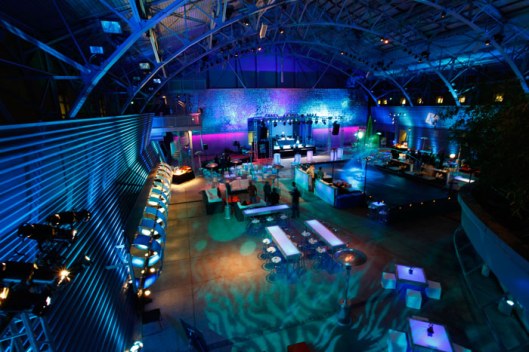
Today is a day of celebrations. In a surprise arrival, ESEP Mission Director, Nick Castillo and five other ESEP executives ferried up to Earth Spaceport Prime. Castillo sent over a temporary crew to the QE II and ordered all 28 crew members to join the executives and spaceport astronauts for a pre-commissioning party.

Celebration party set up for Spain ESEP Center

Celebration party set up for Spain ESEP Center

On Earth, the families and friends of the crew were invited to a ESEP party at one of the three ESEP Centers in the United States, Japan, and Spain/France. All four parties were connected through video links on human sized monitors around each room and allowed everyone to interact across the planet and in space.

With the ESEP personnel in orbit, tomorrow’s commissioning of the ships and crew will be done in person, rather than by video link. The idea of sending up the ESEP executives was discussed two months ago, but it was contingent on how tests and drills on the ships went in this last month.

Tonight the crew will return to their ship and will have dinner with the Commander and Captain as hosts. Castillo and the ESEP team were also invited to join the crew. After dinner there will be short team meetings to review tomorrow’s schedule of events, responsibilities, and requirements, then all crew members will be in quarters by 21:00 NST.

On Mars Time

30 Saturday Jan 2016

Posted by Paul Kiser in Earth Space Exploration Program, Mars, Mars 2016, Mars calendar, Science Fiction, Space, Space, Virtual Adventures

≈ Leave a comment

Tags

2016, astronauts, communications, crew morale, engineering, ESEP, ESS Carl Sagan, ESS Queen Elizabeth II, JPL, Mars, Mars Mission 2016, Mars time, NASA, Noctis Standard Time, NST, Pacific Standard Time, PST, science, space, space travel, spacecraft, Time, Time Zones

  • Mars Date/Time:  Year 1, Sur One, Friday, Sol 27 (1.1.27)  2:21 PM NST
  • Earth Date/Time:  Saturday, 30 January 2016  2:00 PM PST

The Earth Space Exploration Program (ESEP) is now officially on Noctis Standard Time (NST). This is the time zone on Mars that the primary landing sites for Mars Mission 2016, near the Noctis Labyrinthus feature.

The Noctis Labyrinthus Time Zone on Mars

The Noctis Labyrinthus Time Zone on Mars

It also means we are now on the Mars calendar and today is Friday, Sol 27, Sur One. There are sixty days in this month. The orbital transfer to Mars will begin later this month and the crew will arrive in Mars orbit in the third month, or Sur Three.

The crew will not start shift rotation until Sunday, Sol 29, after the ship and crew have been commissioned. Most of the crew will either the 8:00 AM to 2:00 PM shift or the 10:00 AM to 4:00 PM. Two astronauts will be on duty on the Command Deck from 4:00 PM to 12:00 midnight, and another two from 12:00 midnight to 8:00 AM.

Sur One

Sur One

Each crew member will have three days of light duty in every ten days. Light duty may mean shorter hours of scheduled work, a lighter workload, or assignment to a special duty. Whenever possible, the team members work together to plan a group schedule so that tasks can be planned based on the number of team members on duty at any given time.

Tomorrow crew members will be preparing for Sunday’s (Earth’s Monday) commissioning ceremonies both ships and the crew will be commissioned.

Finals Week

29 Friday Jan 2016

Posted by Paul Kiser in Earth Space Exploration Program, Mars, Mars 2016, Mars calendar, Science Fiction, Space, Space, Virtual Adventures

≈ Leave a comment

Tags

astronauts, communications, crew morale, engineering, ESEP, ESS Carl Sagan, ESS Queen Elizabeth II, final testing, Finals week, HD cameras, JPL, Mars, Mars Mission 2016, Mars time, NASA, Pacific Standard Time, PST, science, space, space travel, spacecraft, spacecraft design, systems test, Time, Time Zones, UTC

  • Mars Date/Time:  Year 1, Sur One, Thursday, Sol 26 (1.1.26)  2:59 PM NST
  • Earth Date/Time:  Friday, 29 January 2016  2:00 PM PST

Today the crew is finished testing on the systems on ESS Queen Elizabeth II and the ESS Carl Sagan. As the crew is currently on board the QE II, a crew of spaceport astronauts filled in for the testing on the Sagan.

A mishap did occur during Thursday’s test of the Sagan’s Impulse Cycle Propulsion (ICP) pellet propulsion. An astronaut broke his leg when a pellet moved into position for firing. The situation was investigated and it was determined that the astronaut had not notified the Pilot on QE II that he was in the loader area. New requirements were instituted to require video monitoring of the propulsion section by at least two crew members during any use of the propulsion drive on either ship.

Sagan ICP Gun Section near where an astronaut broke his leg this week

Sagan ICP Gun Section near where an astronaut broke his leg this week

With the exception of Thursday’s accident this week’s testing has gone well. The crew has run simulated test firings of the propulsion systems of both ships without actually launching a pellet or detonating it. All other systems are ready for the orbital transfer to Mars.

The next few weeks the crew will be loading in final supplies, running drills, and preparing to leave Earth for a minimum of 21 months. The crew is ahead of schedule and tomorrow will be light duty before Monday’s commissioning of both ships.

Also, tomorrow the entire program switches over to Mars time. This date was selected to give the crew adequate time to adjust before orbital transfer and it will have minimal impact on the crew. At 12:00 PM PST the clocks will convert to 12:21 PM NST.

Mars Calendar: 12 Long Months

28 Thursday Jan 2016

Posted by Paul Kiser in Earth Space Exploration Program, Mars, Mars 2016, Mars calendar, Science Fiction, Space, Space, Virtual Adventures

≈ Leave a comment

Tags

2016, astronauts, communications, crew morale, ESEP, ESS Carl Sagan, ESS Queen Elizabeth II, JPL, Mars, Mars Mission 2016, Mars time, NASA, science, space, space travel, Time

  • Mars Date/Time:  Year 1, Sur One, Sol 25 (1.1.25)  3:38 PM NST
  • Earth Date/Time:  28 January 2016  2:00 PM PST

Creating the Martian calendar required understand why Earth’s calendar is divided into units. In some cases there is a clear astronomical reason (one planet rotation equals a day,) but other units, such as weeks, have no celestial cycle to establish the unit.

However, the month and year on Earth can be traced to certain astronomical patterns.

MONTH and YEAR
Earth months are loosely based on the orbit of the Moon. The Moon orbits Earth more than twelve times per year, but there is a clear link between the phases of the Moon, and the length of a month.

Mars has two Moons, but they’re orbits are not useful in establishing a time unit similar to Earth’s month standard; however, because Mars is tilted on its axis similar to Earth, it does experience seasons. Those season’s can be measured by the two equinoxes and two solstices.

Earth's division of seasons
Earth’s division of seasons
Mars division of seasons

However, because the orbit of Mars takes almost twice as many days (Earth days) than Earth, the seasons are almost twice as long and they have more variance (length) than Earth’s seasons.

Mars takes almost twice as long as the Earth to orbit the Sun, and Mars orbit is more non-circular than Earth's

Mars takes almost twice as long as the Earth to orbit the Sun, and Mars orbit is more eccentric than Earth’s

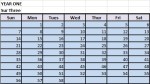
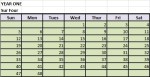
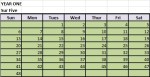
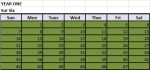
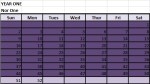
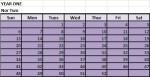
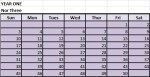
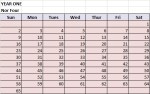
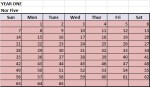
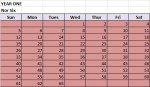
To establish a Mars month, ESEP divided the Mars year (one orbit around the Sun) into four seasons. Each of those seasons are divided into three, roughly equal months. The full Mars calendar can be seen here.

ESEP began the calendar on the Winter solstice for the Southern Hemisphere, which occurred on 3 January 2016 (Earth Date.) The first six months are measured by the Winter and Spring in the Southern Hemisphere (called Sur) and the second six months are measured by the Winter and Spring of the Northern Hemisphere (called Nor.) 

Sur One
Sur Two
Sur Three

Sur Four
Sur Five
Sur Six

Nor One
Nor Two
Nor Three

Nor Four
Nor Five
Nor Six

Mars Calendar: Why Seven Days Make a Week

27 Wednesday Jan 2016

Posted by Paul Kiser in Earth Space Exploration Program, Mars, Mars 2016, Science Fiction, Space, Space, Virtual Adventures

≈ Leave a comment

Tags

astronauts, crew morale, ESEP, ESS Carl Sagan, ESS Queen Elizabeth II, JPL, Mars, Mars calendar, Mars Mission 2016, Mars time, NASA, science, seven objects, space, space travel, Time, week

  • Mars Date/Time:  Year 1, Sur One, Sol 24 (1.1.24)  4:16 PM NST
  • Earth Date/Time:  27 January 2016  2:00 PM PST

As we have noted, a calendar is a human device, not a scientific one. This is especially true when it comes to the construction of a week. A day is determined by the time it takes a planet to make one rotation on its axis. A year is determined by the time it takes a planet to make one orbit of the Sun. 

A week = 7 days because our ancestors saw seven significant moving objects in the sky.

A week = 7 days because our ancestors saw seven significant moving objects in the sky.

However, a week has no astronomical cycle. It is simply a device humans created. A calendar doesn’t have to be divided into weeks; however, over time we have allowed the ‘week’ to define a boundary between work and rest. For this reason alone it would create problems to revise or eliminate the use of the ‘week’ concept in the Mars calendar.

WEEK
Humans have divided the Earth calendar into weeks simply because they knew of seven moving heavenly bodies in the sky. Those seven objects were the Sun, Moon, Mars, Mercury, Jupiter, Venus, and Saturn. The Latin/Spanish names for those objects are Sōlis/domingo, Lūnae/lunes, Martis/martes, Mercuriī/miércoles, Iovis/jueves, Veneris/viernes, Saturnī/sábado. The English version of the days of the week were heavily influenced by the germanic language; however, the names still correspond to the names of the seven moving objects in our sky.

The first month of the Mars year is 60 days long and has 8 1/2 weeks.

The first month of the Mars year is 60 days long and has 8 1/2 weeks.

A week is simply a repeating pattern of the names of seven objects in Earth sky. If Earth had two Moons, or if Uranus or Neptune were in an orbit close enough to be visible to the naked eye, we might have an eight-day week, instead of seven. 

Despite its simplistic invention, the week is an important part of how humans note time, so ESEP has chosen to keep the same convention for the Mars calendar; however, because a day on Mars is 40 minutes longer, the days of the week are not in sync. On any given day, the days of the week will not usually be the same on Earth and Mars. When it is Friday on Earth, it is probably not Friday on Mars.

Some discussion occurred regarding changing the name of Tuesday (Martis in Latin) to Terra, since Tuesday was named for Earth’s perspective of Mars, and from Mars perspective, Earth would be one of the significant moving objects in the sky. The idea was rejected. 

Mars Calendar: What’s in a Day

26 Tuesday Jan 2016

Posted by Paul Kiser in Earth Space Exploration Program, Mars, Mars 2016, Science Fiction, Space, Space, Virtual Adventures

≈ Leave a comment

Tags

astronauts, Day, ESEP, ESS Carl Sagan, ESS Queen Elizabeth II, JPL, Mars, Mars Mission 2016, Mars time, NASA, Noctis Standard Time, NST, Pacific Standard Time, PST, Rotation, science, space, space travel, Time

  • Mars Date/Time:  Year 1, Sur One, Sol 23 (1.1.23)  4:54 PM NST
  • Earth Date/Time:  26 January 2016  2:00 PM PST

It is important to remember that a calendar is a human device, not a scientific one. Humans have divided time into units in order to keep track of the past, present, and future events, and science has worked to make time units more precisely measured. Thus, creating time units for Mars is to establish the standard for humans to use to reference past, present, and future events.

There are many possible ways to establish time units on Mars, but the Earth Space Exploration Program (ESEP) determined that fusing elements of Earth time units with the characteristics of Mars would be the most efficient. 

An Earth Day is defined by one rotation of the planet

An Earth Day is defined by one rotation of the planet

DAY
One Earth day is based on one rotation of our planet. It is divided into 24 increments, called hours. Hours are divided into 60 minutes, and minutes are divided into 60 seconds.

One Mars day is also based on one rotation of the planet; however, compared to Earth, Mars rotation takes approximately 24 hours and 40 minutes. Because it is so close, and we are accustomed to the 24 hour clock, scientists have established a “Mars clock” that also has a 24 hour day. They did this by making each second of Mars time slightly longer than an Earth ‘second,’ so there are still 60 seconds to a Mars minute, and 60 minutes to a Mars hour, and 24 hours to a Mars day.

A Mars Day is about 40 minutes longer than Earth's

A Mars Day is about 40 minutes longer than Earth’s

However, this makes a Mars day out of sync with an Earth day, but that is unavoidable. Earth rotates faster than Mars, therefore, Earth days occur faster than Mars.

Space, Oxygen, and the Botany Challenge

25 Monday Jan 2016

Posted by Paul Kiser in Earth Space Exploration Program, Mars, Mars 2016, Science Fiction, Space, Space, Virtual Adventures

≈ Leave a comment

Tags

2016, artificial gravity, astronauts, bamboo, biology, botany, carbon dioxide, crew morale, engineering, ESEP, ESS Carl Sagan, ESS Queen Elizabeth II, food production, gravity, JPL, Mars, Mars Mission 2016, Mars time, NASA, oxygen, plants, science, space, space travel, spacecraft design

  • Mars Date/Time:  Year 1, Sur One, Sol 22 (1.1.22)  5:33 PM NST
  • Earth Date/Time:  25 January 2016  2:00 PM PST

Most of us take plants for granted. Earth’s supply of plants seems inexhaustible, and if you garden, you might believe that some plants (weeds, in particular,) cannot be killed.

However, plants and humans have a bond that cannot be severed. Plants provide food, remove carbon dioxide, and most importantly, they produce oxygen. Humans cannot live without plants.

Sending humans to Mars presents a difficult challenge in that relationship as the demands of plants for light, water, and care is high. At the same time, their output of oxygen and food is minimal in small environments. This is why most human environments in space have used chemical reactions to remove carbon and produce oxygen and water.

Since plants can’t replace more efficient chemical processes in space travel, the botanist challenge is to compete with the chemical processes, and the Botany Division of ESEP has taken on that challenge.

Carbon taken from the air is the source of all plant growth. Faster growing plants absorb more carbon.

Carbon taken from the air is the source of all plant growth. Faster growing plants absorb more carbon.

Our ships rely primarily on chemical processes to create oxygen and to remove carbon; however, air is circulated through the botanical sections to give plants the first opportunity to remove carbon from the air. In addition, plants are part of every inhabited section of the ship, including all crew quarters.

Mostly bamboo plants are used outside of the botanical areas and they are automatically maintained by a computer program that senses soil moisture and analyzes soil content. When the bamboo plants reach a certain height, a member of the Botany team harvests the wood, stows it, and replants a seedling. The wood will be processed on Mars at the first extraterrestrial woodworking shop.

Botanists cannot yet replace the need to produce oxygen through chemical reaction, but their priority is to make humans less dependent on the chemical process to produce breathable air by incorporating natural, biologic sources of oxygen into the human environment.

All On Board

24 Sunday Jan 2016

Posted by Paul Kiser in Earth Space Exploration Program, Mars, Mars 2016, Science Fiction, Space, Space, Virtual Adventures

≈ Leave a comment

Tags

2016, artificial gravity, astronauts, biology, botany, communications, Crew Emplacement, engineering, ESEP, ESS Carl Sagan, International Space Station, ISS, JPL, Mars, Mars Mission 2016, NASA, physician, science, space, space travel, spacecraft, spacecraft design

  • Mars Date/Time:  Year 1, Sur One, Sol 21 (1.1.21)  6:12 PM NST
  • Earth Date/Time:  24 January 2016  2:00 PM PST

Yesterday was Crew Emplacement Day. That means all 28 crew members reported for duty on the ESS Queen Elizabeth II. Most of the crew of 28 was already on board; however, a few people were working out of other locations. With one exception, the crew has been in orbit for over six months.

South Pacific from the International Space Station (credit: NASA/ISS Live

South Pacific from the International Space Station (credit: NASA/ISS Live 23 Jan 2016)

Two of the engineering crew and our Pilot were still wrapping up preparations on our sister ship, the ESS Carl Sagan, and three members of the Communication staff, and two members of the Science staff moved over from Earth Spaceport Prime. The final person on board was Wendy Stevens, our Mission Counselor.

During this next week the crew will be conducting tests of all the ships systems. They have one week to address any last-minute problems before the ships and crew are commissioned on 1 February.

This weekend the crew has a loose schedule in order to prepare their living quarters and their work areas. On Sunday night the Commander has a celebration dinner planned for the entire crew. This may be the first and last time the crew will be able to have two hours of time together. Once the ship is commissioned part of the crew will always be on duty at all times, and once they arrive at Mars, part of the crew will live on the surface while some remain in orbit.

The Mars Mission 2016 is starting to become a reality now that the ship has its crew. Soon our first human ambassadors will be on their journey to Mars.

Who’s In Charge?

23 Saturday Jan 2016

Posted by Paul Kiser in Earth Space Exploration Program, Mars, Mars 2016, Space, Space, Virtual Adventures

≈ Leave a comment

Tags

2016, astronauts, communications, crew morale, engineering, ESEP, ESS Carl Sagan, ESS Queen Elizabeth II, Hohmann Transfer, JPL, Mars, Mars Mission 2016, Mission Control, NASA, science, space, space travel, spacecraft

  • Mars Date/Time:  Year 1, Sur One, Sol 20 (1.1.20)  6:51 PM NST
  • Earth Date/Time:  23 January 2016  2:00 PM PST

When the United States went to the Moon they were guided by ‘Mission Control.’ In many ways the astronauts were dependent and subservient to the people on the ground. In part, that was because the critical information that supplied data about ship operations was in the massive computers on the ground.

Mars Mission is not controlled from the Earth-based control centers. The mission crew does work with ground based centers; however, those perform an advisory role, not an authoritative one. When the ships and crew are commissioned, Commander Jenna Wade will be the final authority on all ship and mission decisions.

Mars Orbital Transfer Path

Earth to Mars in 110 days

This is not an arbitrary decision, but one of necessity as time delay between Earth and Mars could mean the difference between life and death for the crew. In addition, the crew will almost always have more information about a situation than anyone on Earth.

That is why 1 February is more than just ceremony when the ships and crew are commissioned. The mission actually begins on that day and when ESS QE II departs orbit on 24 February, it will just be another day for the crew…well, maybe another BIG day.

It Takes More Than Just Being Smart

22 Friday Jan 2016

Posted by Paul Kiser in Earth Space Exploration Program, Mars, Mars 2016, Science Fiction, Space, Space, Virtual Adventures

≈ Leave a comment

Tags

2016, Apollo, astronauts, crew morale, ESEP, ESS Carl Sagan, ESS Queen Elizabeth II, John F. Kennedy, JPL, Mars, Mars Mission 2016, Moon Program, NASA, space, space travel, spacecraft, Werner von Braun

  • Mars Date/Time:  Year 1, Sur One, Sol 19 (1.1.19)  7:29 PM NST
  • Earth Date/Time:  22 January 2016  2:00 PM PST

It is Rocket Science, so you would expect that the Earth Space Exploration Program (ESEP) would have really smart people…and we do.

But that isn’t enough. Many of the hundreds of thousands of people who work for and with ESEP have advanced degrees, but in an endeavor that has never been done before you have to have people who go beyond smart. As the program has grown ESEP has sought out people who were leaders in their field, but not all of them are still with the program.

Werner Von Braun Prez Kennedy

Dr. Werner von Braun with President Kennedy (credit:  Space.com)

When the United States was designing ships to go to the Moon, Dr. Werner von Braun, the most experienced rocket scientist at the time, ridiculed an engineer that proposed building a separate ship (the Lunar Excursion Module or LEM) that only landed on the Moon and then brought the astronauts back to the main ship (the Command Module.) In the end von Braun realized he was wrong and accepted the engineer’s plan as the best, and possibly only workable concept.

In space, nothing is straightforward or easy. People have to have the ability to do more than just the math. People have to apply skills that they don’t have and see a larger viewpoint than just the problem they’re trying to solve.

Everyone on the crew has spent time in other positions with ESEP. As the ship came together, so did the people who would be crew members. Often the person selected to be on the crew was also the person who was integrally involved with planning, designing, or building the function of the ship that they will responsible for on the mission. The 28 crew members are the best of the best and know more about the history of every part of the ship than almost anyone else.

These people didn’t just learn how to take tests in school, they learned to question, to examine, and rethink any problem. In many ways they are not ‘good employees’ that follow instructions, because they often possess more information about their part of the ship than their superiors. They are creative monsters of thinking and we wouldn’t be going to Mars without them.

The Laundry Challenge

21 Thursday Jan 2016

Posted by Paul Kiser in Mars, Mars 2016, Science Fiction, Space, Space, Virtual Adventures

≈ Leave a comment

Tags

2016, artificial gravity, astronauts, clothes, crew morale, engineering, ESS Carl Sagan, ESS Queen Elizabeth II, gravity, JPL, Laundry, Mars, Mars Mission 2016, NASA, science, space, space travel, spacecraft, spacecraft design, washing clothes, washing machine

  • Mars Date/Time:  Year 1, Sur One, Sol 18 (1.1.18)  8:07 PM NST
  • Earth Date/Time:  21 January 2016  2:00 PM PST

One problem that was never been solved in all our decades in space is doing the laundry. The astronauts on the International Space Station (ISS) never washed their clothes. They wore them as long as they could stand and then they put the dirty clothing on the Russian Progress vehicle that brought supplies to the station. Then the Progress vehicle would undock and burn up in the atmosphere in a planned return designed to destroy the craft.

On the International Space Station the laundry challenge was solved by not doing any

On the International Space Station the laundry challenge was solved by not doing any

That works when you’re in 400 km in orbit above Earth and you have a resupply ship coming every few weeks. It doesn’t work millions of miles away from Earth, you have 28 astronauts on board, and all of them will be on the mission for a minimum of 21 months.

To go to Mars we had to solve the problem and we did by rethinking the cleaning process. Solving the gravity issue has helped because even a little gravity keeps water from free-floating; however, the real solution was making laundry a continuous process that washes one item at a time.

Our space washing machines are not what you will find in your home. Our Attire Washing Systems (AWS) are high-efficiency machines that are designed to save energy, time, and save and recycle water.

The difference is that the AWS is more like a conveyor process where each clothing item is processed one piece at a time. Only this conveyor is circular and wraps around itself in an enclosed system that clothes enter, are processed, then come out dry and clean. 

Cloth fed into the center of the machine is infused with the cleaning solution as it goes up and over the top of the entry point. Near the top the cloth is pressed to push out dirt and the cleaning solutions. As the cloth come down it is rinsed. At the bottom of the cycle the cloth is then pressed again to push out as much water as possible. As the cloth rises up and over the washing cycle it is travels through a chamber that briefly exposes it to a micro-vacuum environment that sucks out most of the remaining water. On the way back down it is exposed to dry heated air that finishes the process and is expelled into a basket for the astronaut to collect.

It takes about four minutes to load a week’s worth of personal laundry. Once the clothing, sheets, and/or towels are fed into the AWS, the first item comes out in three and a half minutes, and in a little over ten minutes the astronauts laundry is done.

The ultimate test for the AWS will be the fine grit of Mars; however, our rover missions have given our engineers good information on what to expect once humans are on the planet. Fortunately, most of the dust will be on the suits, not inside them.

Quill Length and Gravity

20 Wednesday Jan 2016

Posted by Paul Kiser in Earth Space Exploration Program, Mars, Mars 2016, Science Fiction, Space, Space, Virtual Adventures

≈ Leave a comment

Tags

2016, artificial gravity, Axis, Coriolis Effect, ESS Carl Sagan, ESS Queen Elizabeth II, gravity, JPL, Mars, Mars Mission 2016, muscle wasting, NASA, Quill, Rotational Speed, space, space travel, spacecraft, varying gravity environments

  • Mars Date/Time:  Year 1, Sur One, Sol 17 (1.1.17)  8:46 PM NST
  • Earth Date/Time:  20 January 2016  2:00 PM PST

In a previous article we discussed the importance of a gravity environment (SEE:  The Need for G’s.) We explained that the “Quill” sections are perpendicular to the core and rotate to create an artificial gravity environment for the astronauts.

However, spinning something doesn’t create gravity. It creates a force that can imitate gravity if the spin rate is correct for distance from the axis (or core.) In the case of our ships, we spin the Quill sections at two revolutions per minute.¹

Spinning a structure like a spaceship will create an outward force that can feel similar to gravity; however, near the axis or core of the ship (core sections are 30 meters in diameter, so the radius is 15 meters) the effect is barely noticeable. As an astronaut moves farther into a Quill, and away from the core, the effect increases until, at 224 meters, the astronaut experiences the equivalent of Earth’s gravity, or 1G.

RotationSpeedOfCentrifuge.svg

GRAPH 1.0 – G Force and Rotational Speed versus Radius from the Axis

Since each Quill section is 33 meters, it requires seven Quill sections to reach the distance needed for a 1G environment. This means that Quill sections designed for human habitation are seven Quill sections long with the crew quarters in the sixth and seventh Quill.

Work stations are in sections three, four, and five where gravity is equal that on Mars (.38G) or greater. The ladder tube (a two meter diameter corridor with a ladder) that runs the length of each Quill has color coded lights that indicate the percentage of G force at that point. (SEE:  Table 1.0)

TABLE 1.0 – Color Codes For Gravity Environments

  • RED:                 0 to .19 G
  • ORANGE:   .20 to .3.9 G
  • YELLOW:    .40 to .59 G
  • GREEN:       .60 to .79 G
  • BLUE:        .80 to 1.00 G
  • VIOLET:             +1.00 G

The Command Section at the front of the ship is part of the core, but does not rotate with the rest of the ship. This means it is in a weightless environment; however, because the ship uses cameras instead of windows, there is no reason for the Command team to be In the Command Section during the orbital transfer from Earth to Mars; therefore, an Auxiliary Control is in the fourth section of a Quill. The Command Team operates out of Auxiliary Control for almost the entire trip.

¹The Coriolis Effect is a force that acts on a body at a right angle to the downward force of the spin. In this case, spinning the Quills too fast would cause a human to feel ‘the spin’ as well as the downward force. Humans do not tend to sense spin rates of two revolutions per minute or less.

Blast Propulsion

19 Tuesday Jan 2016

Posted by Paul Kiser in Earth Space Exploration Program, Mars, Mars 2016, Science Fiction, Space, Space, Virtual Adventures

≈ Leave a comment

Tags

2016, artificial gravity, blast propulsion, electrostatic generator, ESS Carl Sagan, ESS Queen Elizabeth II, friction generator, gravity, Hohmann Transfer, ICP, Impulse Cycle Propulsion, JPL, Mars, Mars Mission 2016, NASA, nuclear pulse, propulsion, rocket, rocket propulsion, shock absorber, space, space travel, spacecraft

  • Mars Date/Time:  Year 1, Sur One, Sol 16 (1.1.16)  9:24 PM NST
  • Earth Date/Time:  19 January 2016  2:00 PM PST

Both the ESS QE II and the ESS Sagan are have blast propulsion, known as Impulse Cycle Propulsion (ICP). This consists of a series of explosions behind the ship that push it forward.

Mars Pulse Engine Drive

Artist rendition of a Blast Propulsion Drive

Each bomb, or pellet is pushed out of the engine section of the ship and is attached be a wire or tether. When the pellet reaches the correct distance the tether pulls taught and signals the ship. At that millisecond the computer on the ship sends the detonation code to the pellet and it explodes. The strength of the explosive force on the ship is determined by the pellet type and size, and the length of the tether. Acceleration of the ship is determined by explosive force and the frequency of pellet deployment.

The engine section consists of a blast plate and blast umbrella that absorbs most of the blast. The blast plate and umbrella is connected to the ship by sixteen resistance rods, or shock absorbers, that both cushion the shock of the pellet detonation and generate power using electrostatic generators on each rod that produce electricity from friction.

The blast umbrella plates also have electrostatic generator shock absorbers rods that also generate electricity for the ship as well as absorb more of the pellet blast to propel the ship.

The ship also has the more traditional chemical-based engines to correct and alter course. Each Quill section has it’s own engine and it is tied into the Command section. The engines on the Quill sections are primarily for landing on Mars. 

Acceleration of the ESS QE II is designed for 9.81 meters per second per second, which is equal to 1 g (the same gravity force of Earth at sea level.) It can accelerate up to 2 g; however, the needed speed to accelerate to 150,000 km/hr (41.67 km/s) only requires 4.25 seconds of acceleration at 1 g, so 2 g acceleration is not needed. In fact, the QE II will accelerate to 45,000 km/hr on the first day, then evaluate the ship’s performance. It will then accelerate to 100,000 km/hr on the third day, and then match speed with the ESS Sagan on the six day.  

The ESS Sagan will leave orbit two and a half days after the QE II departs, but will accelerate to 150,000 km/hr over a 12 hour period. It will overtake the QE II. The QE II will disassemble and recombine with the Sagan creating one larger ship. The combined ships will continue their 110 day trip to Mars. Other than course corrections, the ships will not use the ICP engine again until it is time to decelerate for Mars orbit.

Pre-Launch Schedule

18 Monday Jan 2016

Posted by Paul Kiser in Earth Space Exploration Program, Mars, Mars 2016, Science Fiction, Space, Space, Virtual Adventures

≈ Leave a comment

  • Mars Date/Time:  Year 1, Sur One, Sol 15 (1.1.15)  10:00 PM NST
  • Earth Date/Time:  18 January 2016  2:00 PM PST

MEDIA RELEASE – 18 January 2016
Contact:  Paul Kiser (775.224.2228 or pkiser.mars2016@gmail.com)
                 Public Information Officer
                 Earth Space Exploration Program (ESEP)

Pre-deorbit Schedule of Significant Events (All Dates/Times on Earth PST)

23 January – Crew Emplacement Day. All remaining crew members will take residence on ESS Queen Elizabeth II.

25 January – Finals Week:  QE II. Static tests of ESS Queen Elizabeth II system from January 25-29.

30 January – Mars Time Conversion. All mission clocks convert to Mars Noctis Standard Time and to the Mars Calendar (at 12:00 noon PST.)

1 February – Commissioning Day. Commissioning of ESS Carl Sagan at 10:05 AM PST (29 Sur One at 9:00 AM NST) followed by Commissioning of ESS Queen Elizabeth II at 12:05 PM PST (29 Sur One at 11:00 AM NST.) Commissioning of Commander Jenna Wade, Captain Ken Hart, and the Officers and Crew of the ESS QE II. This places them in command of the ship.

14 February – Countdown Begins ESS QE II.

16 February – Countdown Begins ESS Sagan.

20 February – Close Out of ESS QE II. Except for power and life support, all operations of the ESS Queen Elizabeth II become independent and only crew are allowed on ship unless Commander approves.

22 February – Close Out of ESS Sagan. All personnel vacate ship and except for power and life support, all operations are independent and ship is under remote command.

22 February – Orbit Positioning ESS QE II. ESS Queen Elizabeth II moves into a higher orbit.

23 February – Orbit Positioning ESS Sagan. ESS Carl Sagan moves into a higher orbit.

24 February – Orbital Transfer Firing (OTF) QE II. ESS Queen Elizabeth II leaves Earth orbit for Mars at 12:34:44 PST (51 Sur One at 20:54:32 NST)

26 February – Orbital Transfer Firing (OTF) ESS Sagan. ESS Sagan leaves Earth orbit for Mars at 12:34:09 AM PST (53 Sur One at 07:42:58  NST)

Death In Space?

17 Sunday Jan 2016

Posted by Paul Kiser in Earth Space Exploration Program, Mars, Mars 2016, Science Fiction, Space, Space, Virtual Adventures

≈ Leave a comment

Tags

2016, crisis, death, JPL, losing a crew member, loss, Mars, Mars Mission 2016, memorial, NASA, space, space travel, spacecraft


  • Mars Date/Time:  Year 1, Sur One, Sol 14 (1.1.14)  10:40 PM NST
  • Earth Date/Time:  17 January 2016  2:00 PM PST

There were 27 people on the nine Apollo missions that went to Moon. We will exceed that total in our first mission to Mars. The total time for all the Apollo Moon missions was 91 days. The crew of the ESS Carl Sagan won’t even reach Mars in that time. The Apollo missions were all considered high risk, and one mission to the Moon almost lost three crew members. Our missions elevate that risk by a factor of ten.

background_memorial

NASA Memorial to the 24 astronauts who gave their lives in service to the United States Space Program

We will do everything in our power to prevent anyone dying in space; however, with crews of 28 astronauts or more, most of whom will be in space for over two years, death is a real possibility. All crew members know that losing a fellow astronaut is part of the risk of space travel and like every other potential crisis, we plan for the possibility.

If a crew member dies in mission and their body is recoverable, the body will be cremated. Each crew member has declared what they wish to be done with their ashes, and every effort will be made to honor their request. The Counselor and Captain will designate someone to collect the personal items of that crew member and pack it for return to Earth.

Assuming the mission is not in a crisis, the crew members will be follow a ‘significant loss’ protocol (also used for crew members before and after their crewmates return to Earth) that involves formal and informal discussion, remembrance , and ceremony of that crew member or members.

All crew members who had a significant relationship with the deceased crew member(s) will have counseling and evaluation. If the loss is too difficult for a crew member they will be reassigned and/or scheduled for return.

There is no way to know how much the loss of a crew member(s) will impact a mission; however, the Captain and Counselor have broad authority to make adjustments and reassignments after the loss of crew.

The Earth/Mars Dance

16 Saturday Jan 2016

Posted by Paul Kiser in Earth Space Exploration Program, Mars, Mars 2016, Science Fiction, Space, Space, Virtual Adventures

≈ Leave a comment

Tags

2016, ESS Carl Sagan, ESS Queen Elizabeth II, head orbital transfer, Hohmann Transfer, JPL, Mars, Mars Mission 2016, NASA, space, space travel, spacecraft, up orbital transfer

  • Mars Date/Time:  Year 1, Sur One, Sol 13 (1.1.13)  11:19 PM NST
  • Earth Date/Time:  16 January 2016  2:00 PM PST

Any journey begins with a beginning point and an ending point. Our journey to Mars is no different; however, in this case the beginning point and the ending point are in motion and the distance between them varies depending on where each planet is in their orbit.

Launch Day
Launch Day
Closest Approach
Closest Approach

Mars and Earth will be at their closest point on 30 May 2016. To take advantage of this the ESS Queen Elizabeth II and the ESS Carl Sagan will depart for Mars in late February and arrive in June. We call this a “up” orbital transfer because the ships are coming up from behind the planet to meet it in its orbit.

However, we will also be using a “head” orbital transfer in future missions. This is when the departure planet is ahead of the destination planet. It requires more fuel in most cases; however, it gives us more opportunities to send ships between the two planets. The next three missions to Mars will be using the head orbital transfer.

Because Earth moves faster than Mars, an up orbital transfer to Earth is impractical once it is ahead of Mars in orbit. For this reason the first return mission to Earth will be a ‘head’ orbital transfer in April 2017, and that mission won’t arrive at Earth until November 2017.

Earth Space Exploration Program

15 Friday Jan 2016

Posted by Paul Kiser in Earth Space Exploration Program, Mars, Mars 2016, Science Fiction, Space, Virtual Adventures

≈ Leave a comment

Tags

2016, Earth Space Exploration Program, ESEP, international, JPL, Mars, Mars Mission 2016, NASA, space, space travel, spacecraft

  • Mars Date/Time:  Year 1, Sur One, Sol 12 (1.1.12)  11:56 PM NST
  • Earth Date/Time:  15 January 2016  2:00 PM PST

ESEP logoThe Mars Missions are government funded operations from 23 different member countries that established the Earth Space Exploration Program (ESEP). Each country must fund two years of operations in advance, and must commit to funding for an additional five years. Current annual funding (2016) is $850 million/per country/per year and it increases by $50 million each year.

The countries are as follows:

  • Australia
  • Brasil
  • Canada
  • Chile
  • China (中国)
  • India (इंडिया)
  • Indonesia
  • Italy (Italia)
  • Germany (Deutschland)
  • France
  • Japan (日本)
  • Mexico (Méjico)
  • Netherlands (Nederland)
  • Nigeria
  • Panamá
  • Perú
  • Philippines (Pilipinas)
  • Saudi Arabia (المملكة العربية السعودية)
  • South Korea (대한민국)
  • Spain (España)
  • Thailand (ประเทศไทย)
  • United Kingdom
  • United States of America

No one country has more authority than any other and only scientists are allowed to be on the governing body. Russia is notably absent from the program because they did not accept the seven year funding commitment and the equal partnership of the member countries. China and the United States also hesitated; however, both countries found the funding formula allowed them to continue most of their current space programs, while taking part in the most significant space exploration effort in history.

The program is not a plan of several individual missions, but rather it is a series of overlapping missions with some people staying on Mars, while others return to Earth. Decisions of who is to stay and who will return are to be made in the months leading up to a return mission. In the case of the first mission, it is expected that only one-quarter to one-third of the crew will be members of the first return mission.

At least fifty percent of the crew from each mission will remain at Mars (on the surface or in orbit.) At least another twenty-five percent will remain longer than two return-to-Earth missions. Any crew members remaining at or on Mars for more than two return-to-Earth missions will have priority for the next return mission; however, no one is required to return to Earth unless the Mission Commander, the Mission Counselor, or the Mission Physician orders them to return.

The goal of the Earth Space Exploration Program is to follow the example of the International Space Station and provide ongoing occupation and exploration of Mars. It is projected that by the end of the first year on Mars we will have tripled our knowledge and understanding of space, space travel, living in space, and of the planet. By the end of the second year we will have doubled that knowledge of the first year, and by the end of the third year we will have a permanent, self sufficient, residency on Mars that will have established its own social, economic, and political identity. 

Decades ago Carl Sagan said, “Space calls to us…” We believe it’s time we answered that call.

What Time Is It?

14 Thursday Jan 2016

Posted by Paul Kiser in Mars, Mars 2016, Science Fiction, Space, Space, Virtual Adventures

≈ Leave a comment

Tags

2016, JPL, Mars, Mars Mission 2016, Mars time, NASA, Noctis Labyrinthus, Noctis Standard Time, NST, Pacific Standard Time, PST, space, space travel, spacecraft, Time

  • Mars Date/Time:  Year 1, Sur One, Sol 12 (1.1.12)  12:36 AM NST
  • Earth Date/Time:  14 January 2016  2:00 PM PST
There are several versions of Mars Clock apps

There are several versions of Mars Clock apps

As humans expand their reach, time becomes a major issue. Before the invention of machines that could transport people over long distances in a short time period, all time was local. When the Sun was directly overhead in a village, it was noon.

However, as transportation and communication advanced, so did our recognition that the time of day was different depending on the location. The railroads in Europe were the first to establish a ‘standard time’ that later became know as Railway Time.

However, with space travel, a time standard based on Earth isn’t compatible with keeping time on another planet. We’ve already discussed this issue in a previous article (SEE: A Matter of Time,) but there is more to this issue than just when the Sun rises and sets on two different planets.

The Mars Mission has four Earth-based Operation Control locations. (San Jose, California, USA; Kumamoto, Kumamoto Prefecture, Japan 熊本市; and the twin Operation Centers in Figueres, Spain and Perpignan, France.) In addition, we have our launch facility near Arica, Chile. For simplicity the workers and crew have been on Pacific Standard Time; however,  on 30 January all mission operations on Earth, and in orbit will switch to Mars Noctis Standard Time (NST.)

This will eliminate confusion by Earth-based operations as to what time it is for the Mars Alpha Base (once it is established) and avoid interruptions during their sleep cycle. As teams for previous robotic missions to Mars have known, this creates and odd situation for them, because of a forty-minute difference between a day on Earth and a day on Mars. All Mars Operation Control locations will be on shifts of six hours and ten minutes each (plus a one hour briefing before each shift,) with the next day beginning 40 minutes later.

For the crew and the support staff of the Mars Mission, the question: “What time is it?” will require knowing what time it is on Mars at that moment.

Crew Training and Alert Drills

13 Wednesday Jan 2016

Posted by Paul Kiser in Mars, Mars 2016, Science Fiction, Space, Space, Virtual Adventures

≈ Leave a comment

Tags

2016, Alerts, Code Alerts, Crew Status, Crew training, ESS Carl Sagan, ESS Queen Elizabeth II, JPL, Mars, Mars Mission 2016, NASA, space, space travel, spacecraft

  • Mars Date/Time:  Year 1, Sur One, Sol 11 (1.1.11)  1:16 AM NST
  • Earth Date/Time:  13 January 2016  2:00 PM PST

The ESS Queen Elizabeth II will depart Earth orbit in exactly six weeks. Currently the 28 crew members are in orbit preparing both the ESS QE II and the ESS Carl Sagan for departure.

In the next few weeks the crew will be stocking the ship with the more perishable items, perform final tests on ship systems, and conduct training aboard both ships.

Our emergency codes are not to prepare for battle, but to save lives

Our emergency codes are not to prepare for battle, but to save lives

Part of the training will be drills in the event of a crisis. Each crew member is assigned areas of responsibilities in an emergency. In some situations the crew members will be required to seal up the compartment they are in and shelter-in-place; however, some situations will require all crew members to take action to resolve the crisis as quickly as possible.

Among the emergency codes are:

Code Command – All Command Staff are to report in to the Command Module and/or move to that section. All other staff is to stand by for further instructions. (Normally for a crisis requiring an immediate decision from the Command Staff regarding an imminent threat to ship or crew.)

Code Alert – All crew members report to assigned stations, secure the area and await further instructions. Code Alert is also the call to prepare to abandon the ship.

Code Med (Location) – Medical staff to identified area.

Code Tag – All team members call or report to their Director or Commander immediately.

Code Air (Location) – Pressure leak within the ship or habitat or other environmental threat that may endanger the crew and/or ship. Each member to seal doors, report, and await instructions.

Code Fire (Location) – A fire or threat of fire exists. A crew members are trained to take specific actions based on the location of the fire.

Code Green – A threat to the Botanical section of the ship or habitat. Usually this would be a computer generated alert when sensors indicate a severe problem.

Mars Alpha Landing Sites

13 Wednesday Jan 2016

Posted by Paul Kiser in Mars, Mars 2016, Science Fiction, Space, Space, Virtual Adventures

≈ Leave a comment

Tags

2016, Cráter de Tormenta, JPL, Landing sites, Mars, Mars Mission 2016, NASA, Noctis Labyrinthus, space, space travel, spacecraft, Storm Crater

Date: Year 1, Sur One, Sol 10 (1.1.10)

Alpha Landing Sites

The Alpha Landing Sites near Noctis Labyrinthus (Image credit: Mars Trek/NASA)

A few days ago we announced the four possible landing zones on Mars. Today we are looking at the primary zone (Alpha) and the four possible landing sites within that zone. These for sites will have to be eliminated by the crew before they would consider landing at any of the three other sites.

The Alpha sites are located in a transition region between the Tharsis Volcanic Plateau and Noctis Labyrinthus. The first Mars landing site will likely become a major hub for exploring the features in a 2,000 kilometer radius around it. Access to and from the site will be important, and the Alpha sites have been selected with that in mind.

In addition, a community as large as 500 scientists may be living at the Alpha landing site within eight years, so a roughly level area with room to expand is vital to the first ‘city’ on Mars.

Alpha Site 1A and 1B are located near a small impact crater west of Noctis Labyrinthus. This crater has been designated as Cráter de Tormenta or Storm Crater. The 200 meter deep crater will give scientists immediate access to areologic (geologic) information about the area. The crater may also play a role in development of the colony by providing sloped areas with good exposure to the Sun for solar panels and the botanical structures.

The details of each site are as follows:

    Site           Elevation   Longitude  Latitude  Distance from 1A

Alpha 1A       6,483 m      -108.58°       -4.61°

Alpha 1B       6,504 m      -108.66°       -4.54°                 6.4 km

Alpha 1C       6,513 m      -108.34°       -5.06°                34.0 km

Alpha 1D      6,496 m      -108.37°       -4.72°                13.5 km

No Windows = A Better View

11 Monday Jan 2016

Posted by Paul Kiser in Mars, Mars 2016, Science Fiction, Space, Space, Virtual Adventures

≈ Leave a comment

Tags

2016, crew morale, ESS Carl Sagan, ESS Queen Elizabeth II, HD cameras, High Definition, JPL, Mars, Mars Mission 2016, Monitors, NASA, space, space travel, spacecraft, spacecraft design, windows

Date: Year 1, Sur One, Sol 9 (1.1.9)

Windows are a relic of primitive space travel. When building a spacecraft in the 20th century the astronauts had to see outside the ship, so windows were installed. They had to be a heavy, thick, and transparent material because the lack of pressure outside meant that any normal window would explode.

Windows on ISS

Windows on the International Space Station (ISS)…great when there is something to look at, but not so much in the black of space

Windows didn’t help the astronauts see any better than normal vision and restricted the view to the direction the window faced. Windows also didn’t record the view, so the benefit of a window was completely dependent on an astronaut looking out of it.

When Neil Armstrong dirtied his boots on the Moon, everyone else saw a grainy image of shadows and light that looked vaguely like something hopping down a pole. Today, a moon landing today would have three or four high-definition (HD) cameras fixed on an astronaut’s descent down the ladder, and there might even be a drone with a camera using thrusters hovering over the event. We would watch in amazement on an HD screen that would make us feel like we were there on the Moon, looking through a window at the historical moment.

The fact is that using today’s HD cameras gives us a better view than any window ever designed. In addition, we can use cameras that can see in the dark, and see in different wavelengths of light outside of normal human vision.

Designing a spacecraft with windows makes no sense when cameras can provide better imaging and can do more than the human eye. For that reason we have almost no windows on our ships, and we have a better view of the outside.

No fewer than eight cameras provide our command ships with a forward view. Each of those cameras can be tilted, panned, and zoomed. Normally all eight cameras are focused ahead with approximately the same view. Four of the eight cameras ‘see’ in a different wavelength than the visible spectrum and all eight cameras can be used to look at independent views.

In addition we have over 50 cameras on the core section that give a 360°/360°/360° (X/Y/Z axis) view of the ship and it’s surroundings. The Quills each have 24 outside cameras that, like the cameras on the Core Sections, can be viewed by anyone, on any monitor on the ship.

The Command Deck is an array of monitors that allow the crew to visually observe the outside of the spacecraft, however, the system is not dependent on a crew member staring at a monitor. Computer programs track and alert the crew of any unusual movement outside and/or near the ship using a broad light spectrum and radar. The view of each camera on the ship is recorded and can also be accessed after an event that requires investigation. 

However, the crew will not have much to look at during the transfer from Earth to Mars. Months of looking at a mostly black background would likely reinforce the isolation of the astronauts. To address this issue, interior monitors can also be switched over to recorded video of a landscape or place that will give an astronaut a sense of being back on Earth. 

There are three windows in each Command Module that will allow human eye observation of the outside; however, it is unlikely that they will be of much use to the crew until they are in orbit above Mars. Even then, the camera system will give better, more detailed images than the windows will provide.

Mars Mission 2016: The Crew

11 Monday Jan 2016

Posted by Paul Kiser in Mars, Mars 2016, Science Fiction, Space, Space, Virtual Adventures

≈ Leave a comment

Tags

2016, areography, astronauts, biology, botany, communications, engineering, ESS Carl Sagan, ESS Queen Elizabeth II, JPL, Mars, Mars Mission 2016, NASA, physician, science, space, space travel, spacecraft

Date: Year 1, Sur One, Sol 8 (1.1.8)

The finalized crew of the Mars Mission 2016 has been announced. There is still the possibility of changes in the next few weeks; however, at this time these are the 28 primary crew members that are training for the 24 February departure.MM2016 Org Chart

(NOTE:  EMT = Estimated Mission Time)

Mission Commander – Jenna Wade (EMT:  27 months)
Jenna will command all aspects of the mission and will be stationed at Mars Alpha Base (2nd Landing.)

Team

  • Lanny Deaton-Science Director
  • Roman Guzman – Engineering Director
  • Naomi Pierce – Communications Director
  • Ken Hart – Captain/Mars Port Commander
  • Wendy Stevens – Counselor
  • Kayla Summers – Physician 

Science Director – Lanny Deaton (EMT:  27 months)
Lanny will oversee all science programs for the mission and will be stationed at Mars Alpha Base (1st landing.)

Team

  • Steve Conner-Areology Officer
  • Jacob Reese-Archeology Officer
  • Alexander Rivera-Biology/Environment Officer
  • Sying Wang-Botany Specialist
  • Heidi Massey-Botany Specialist

Engineering Director – Roman Guzman (EMT:  27 months)
Roman will direct all construction, maintenance, and repair during the mission and will be stationed at Mars Alpha Base (1st landing.)

Team

  • Lanita Case-Engineering Officer
  • Jeramy Prater-Munitions Officer
  • Tory Hankins-Plant Officer
  • Ling Cho-Logistics Officer
  • Abdul Karem-Logistics Specialist

Communication Director – Naomi Pierce (EMT:  27 months)
Naomi will oversee all communications, data collection, and mission reporting and will be stationed on the Mars Port in orbit.

Team

  • Paige Flores-Comm Officer
  • John Schultz-Comm Specialist
  • Krista Parker-Comm Specialist
  • Jennifer Nagi-Data/Record Specialist

Captain ESS QEII/Sagan, Mars Port Commander – Kenneth Hart (EMT:  27 months)
Ken will Captain the ESS Queen Elizabeth II, then take command of the ESS Carl Sagan when the ships merge. Upon arrival at Mars he will become the Commander of the Mars Port and be stationed there.

Team

  • Ann Flores-First Officer/Mars Orbit Control Director
  • Dane Paris-Pilot

Mission Physician – Kayla Summers (EMT:  27 months)
Kayla oversee and monitor the health of the mission crew and she will be stationed at the Mars Alpha Base (2nd landing.)

Team

  • Jai Wong-Nurse Practitioner
  • Alberto Sowers-Nutritional Officer

Counselor – Wendy Stevens (EMT:  27 months)
Wendy will assess the mission crew on an ongoing basis and will make recommendations for crew changes, mission assignments, and crew returns. Wendy will be stationed at the Mars Alpha Base (2nd landing.)

Team

  • Ian Banks-MET Reserve
  • Peyton Rhodes-SKY Reserve

Mars Geography: Five Things To Know

10 Sunday Jan 2016

Posted by Paul Kiser in Mars, Mars 2016, Science Fiction, Space, Space, Virtual Adventures

≈ Leave a comment

Tags

2016, areography, Ares, datum, Hellas Planitia, JPL, Mars, Mars Mission 2016, MOLA, NASA, Olympus Mons, sea level, space

Date: Year 1, Sur One, Sol 7 (1.1.7)

The geography of Mars is complex and unique, but there are five things every human should know about Mars.

One:  It’s Called Areography
The word ‘geo’ refers to ‘of Earth.’ The study of the surface structures of Mars is called areography after the Greek god of war, Ares, counterpart of the Roman god of war, Mars.

Two:  Mars is Two-Faced
The northern hemisphere of Mars can best be described as a big ocean bottom. Much of the northern hemisphere is a low flat plain with few craters. We don’t know for sure what happened, but the best theory is that Mars was hit by a Pluto-sized dwarf planet at about a 45° angle early in its formation.

Credit: Wikipedia/JPL/NASA
Mars Topo 2
Credit: JPL/NASA
Credit: JPL/NASA

In contrast the southern hemisphere consists of elevated areas, including one of the highest mountains in our solar system, large regions of crater impacts, and surface canyon features that can be easily seen from orbit.

Three:  ‘Zero’ Altitude on Mars is Not Based on Sea Level….Obviously
On Earth we have a hypothetical average sea level based on 19 years of recordings to serve as our ‘zero’ altitude standard. On Mars there is no ‘sea level,’ so scientists developed a standard based at the air pressure level that water becomes unstable (the triple point of water.)

However, in 2001, scientists adopted a new standard based on data from the Mars Orbiter Laser Altimiter (MOLA) mission. This standard, called the datum, or datum point, cannot be explained in one paragraph. Suffice to say there is a ‘zero’ elevation on Mars, and like Earth, it is not based on any particular areographic feature, but on a hypothetical altitude determined by scientists.

Four:  Olympus Mons is Really That Big
Mars is half the size of Earth and has an extinct volcano that is twice as high as Hawai’i’s Mauna Kea (from seabed to the highest point) and three times the height of Mount Everest (Nepal’s Sagarmāthā). It is so tall that the the top of it remains in sunlight long after the Sun has set in the lower elevations surrounding it.

Mars volcano region asu

Olympus Mons at the upper left

Olympus Mons is 21 km (13 m) above the Mars global datum, or zero altitude. It is the biggest of four massive volcanoes in what is known as the Tharsis region.

Five:  The Big Hole
The equator and southern hemisphere of Mars is areographic candy store of features, but after Olympus Mons, the one that is hard to miss is Hellas Planitia.

Hellas crater

Hellas Planitia:  Almost all of the Hawi’ian Island chain could fit inside 

Hellas Planitia is a massive impact crater near the South Pole of Mars. It is about 2,100 km (1,400 m) across and is approximately 9,000 m (30,000 ft) deep. It is an uncharacteristic low spot in the southern hemisphere.

← Older posts
Newer posts →

Pages

  • About Noctis on Mars
  • Mars Calendar
  • Media Release
  • Mission Objectives
  • Mission Strategy
  • Noctis on Mars – Part 1
    • Chapter 01: Commissioning Day
    • Chapter 02: Admiral’s Mess
    • Chapter 03: Family Crisis
    • Chapter 04: Valentine’s Night
    • Chapter 05: Stowaway
    • Chapter 06: Au Revoir
    • Chapter 07: Assimilated
    • Chapter 08: First Holiday
    • Chapter 09: Under New Management
    • Chapter 10: Secret Cargo
    • Chapter 11: The Smell of Musk
    • Chapter 12: LOS
    • Chapter 13: Night Shift
  • Noctis on Mars – Part 2
    • Chapter 14: The Closer Enemy
    • Chapter 15: FSB
    • Chapter 16: Silent Killer
    • Chapter 17: Putin’s War
  • Project Schedule
  • Verification

Recent Posts

  • For Her Majesty
  • Halfway
  • Homesick
  • Science Project
  • Extreme Mission Makeover

Enter your email address to follow this blog and receive notifications of new posts by email.

Join 5 other subscribers

Recent Comments

Archives

  • April 2016
  • March 2016
  • February 2016
  • January 2016
  • December 2015

Meta

  • Create account
  • Log in
  • Entries feed
  • Comments feed
  • WordPress.com
Follow Noctis on Mars on WordPress.com

Calendar Earth

December 2025
S M T W T F S
 123456
78910111213
14151617181920
21222324252627
28293031  
« Apr    

Recent Posts

  • For Her Majesty
  • Halfway
  • Homesick
  • Science Project
  • Extreme Mission Makeover

Archives

  • April 2016
  • March 2016
  • February 2016
  • January 2016
  • December 2015

Categories

  • Book
  • Earth Space Exploration Program
  • Mars
  • Mars 2016
  • Mars calendar
  • Science Fiction
  • Space
  • Space
  • Uncategorized
  • Virtual Adventures

Blog at WordPress.com.

Privacy & Cookies: This site uses cookies. By continuing to use this website, you agree to their use.
To find out more, including how to control cookies, see here: Cookie Policy
  • Subscribe Subscribed
    • Noctis on Mars
    • Already have a WordPress.com account? Log in now.
    • Noctis on Mars
    • Subscribe Subscribed
    • Sign up
    • Log in
    • Report this content
    • View site in Reader
    • Manage subscriptions
    • Collapse this bar
 

Loading Comments...